Table of Contents
Sentimental College Send-Off Gift Ideas Without Dorm Clutter
How to pick a sentimental college send off gift that fits a small dorm: one keepsake, voices from home and open-when notes, backed by homesickness research.
The car is already full. Bedding, a mini fridge, a lamp that will be against the rules, three bins labeled “MISC.” And you still want to give them something that says “home is here when you need it.” The problem is that the dorm room is roughly the size of your walk-in closet, and every relative is about to add one more thing.
Here is the short answer. A good sentimental college send-off gift is small enough to live on a desk, carries voices and words from home more than stuff, and is designed for the weeks when homesickness hits, not only for move-in day. This guide walks through how to build one in five steps, with research on homesickness, voices and keepsakes behind each choice.
Key Takeaways
- Dorm rooms are small: one university’s standard double lists 155 square feet for two students, with a closet 54 inches wide (University of Arizona Housing). Every gift competes for a few cubic feet.
- Homesickness is distress caused by actual or anticipated separation from home, with preoccupying thoughts of home and attachment objects, and intense homesickness can contribute to students leaving school (Thurber & Walton, 2012).
- Hearing a parent’s voice calmed stressed children’s stress hormones; instant messages did not (Seltzer et al., 2012). A recorded voice may do more than a text.
- People value physical keepsakes more than identical digital files, driven by a sense of ownership (Atasoy & Morewedge, 2018). One small physical anchor beats a folder of photos.
- Build the gift around the hard weeks: open-when notes, voices from home and one object that belongs on the desk.
The real problem: small rooms, big feelings
Parents and older siblings asking for send-off ideas tend to frame it two ways. “What’s a sentimental gift for my son leaving for college that he’ll actually keep?” and “I don’t want to give her more stuff, the room is tiny.” Both are right.
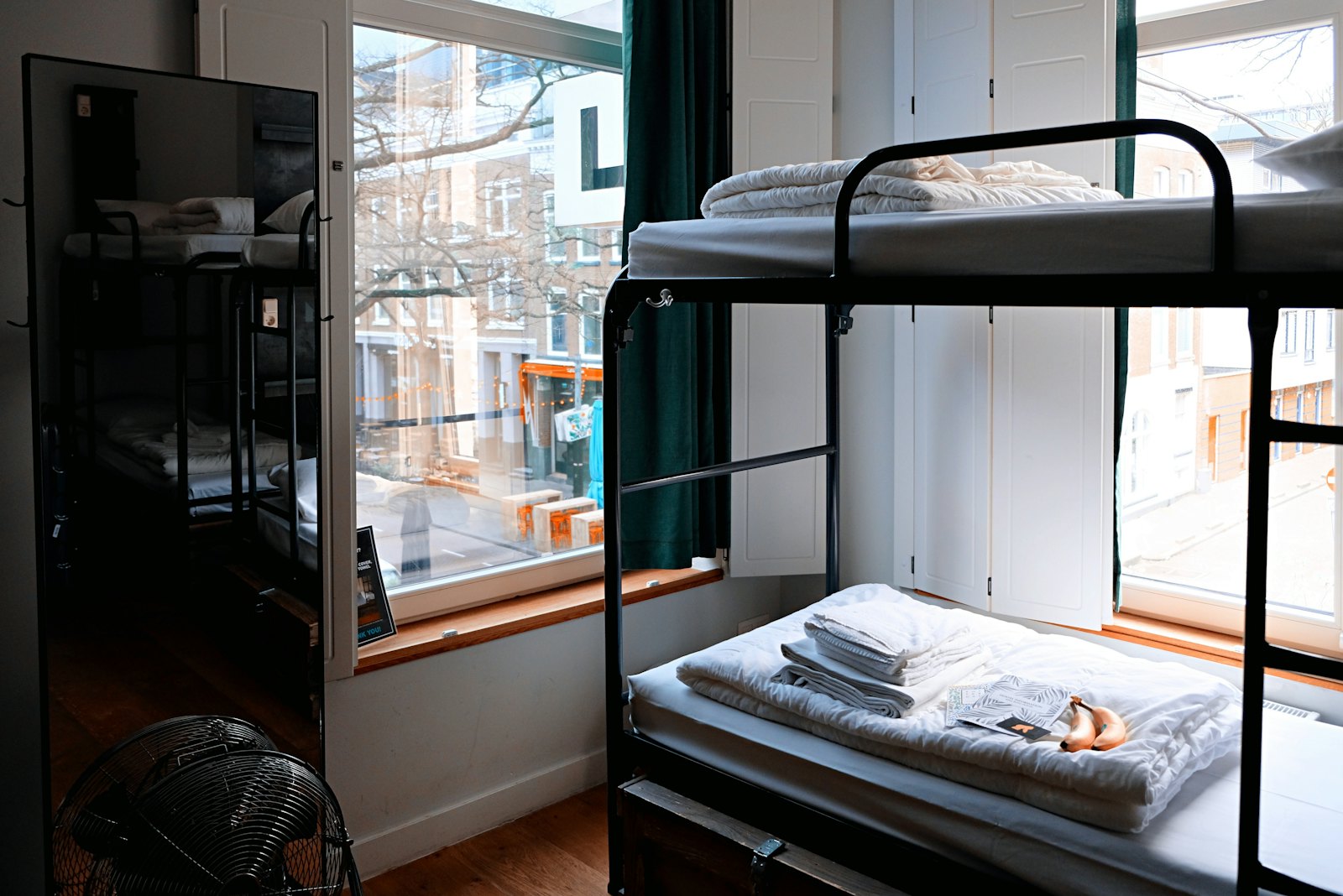
The space problem is literal. At the University of Arizona’s Gila Hall, a standard double room is listed at 155 square feet (11’6” by 13’6”), with a closet 54 inches wide and 13 inches of clearance under the bed. Two people live there. Rooms vary by campus, but the constraint is universal: shared, small, and already full of furniture the student didn’t choose.
The feelings problem is less visible. Most students adjust well. Some have a rough first semester. A send-off gift can’t fix homesickness, and it shouldn’t pretend to. But it can be designed to be useful when the first-month wobble arrives: the night after a bad exam, the weekend everyone else went home, the first time they are sick away from family.
So the brief is: small, personal, and useful in the hard weeks. That rules out most “dorm gift” lists, which are either practical gadgets with no meaning or sentimental objects that take up a shelf.
What the research says
Homesickness is common and worth planning for
Christopher Thurber and Edward Walton’s review in the Journal of American College Health (2012) defines homesickness as the distress or impairment caused by an actual or anticipated separation from home, marked by preoccupying thoughts of home and attachment objects. Sufferers typically report depression and anxiety, withdrawn behavior and difficulty focusing on topics unrelated to home. For some students, intense homesickness can make the move difficult or even unsustainable, sometimes leading to withdrawal from school. The authors also note it is treatable and preventable, with promising strategies.
For a gift-giver, the takeaway is not to panic; it is to design for reality. A gift that offers a short, warm contact with home at the right moment is more useful than one that only celebrates the departure.
A voice does something a text doesn’t
Leslie Seltzer and colleagues ran a striking pair of studies. In the first, in Proceedings of the Royal Society B (2010), girls were put through a stressful task and then comforted by their mothers in person, by phone (voice only) or not at all. The voice-only group showed a hormonal profile strikingly similar to the in-person group: higher oxytocin and a faster return to baseline cortisol. In the follow-up in Evolution and Human Behavior (2012), girls who instant-messaged their mothers after a stressor did not release oxytocin, and their cortisol stayed as high as girls who had no contact at all.
The samples were young girls and their mothers, not college freshmen, and live conversation differs from a recording. But the pattern is a reasonable reason to put voices, not only words, into a send-off gift.
Physical keepsakes feel more like “mine”
Ozgun Atasoy and Carey Morewedge’s five experiments in the Journal of Consumer Research (2018), including souvenir photographs, found people valued physical goods more than equivalent digital ones, because physical things generate a stronger sense of psychological ownership. Russell Belk’s classic paper on possessions and the extended self (1988) argues that our possessions are a major contributor to and reflection of our identities. A student building a new identity in a new place benefits from one or two objects that say who they are and where they come from.
Old friendships need maintenance too
Debra Oswald and Eddie Clark followed high-school best friends into the first year of college for a study in Personal Relationships (2003). The friendships declined on average, but communication moderated the decline, and maintaining a best friendship seemed to buffer students from social loneliness. A send-off gift that includes friends from home, not only family, supports that.
Send-off gift formats compared
| Format | Space it takes | What it carries | Best for | Limits |
|---|---|---|---|---|
| Framed family photo | A shelf or desk corner | Faces, place | Students who like decorating | Silent; easy to stop noticing |
| Open-when letters (a small bundle) | A drawer | Words for specific moments | Students who read and reread | Must be written well; one-time use each |
| Recorded voice messages (on their phone, a card or a small device) | None to very little | Voices, stories, jokes | Hard weeks; students far from home | Files get buried on phones unless anchored |
| Practical gift with a note (good headphones, a kettle where allowed) | Moderate | Usefulness; the note carries meaning | Students who dislike sentimental gifts | Meaning lives only in the note |
| Photo book or printed photo strip | Thin, shelf or drawer | A chosen story | Students who keep things | No sound |
| A care-package plan (one box a month) | Temporary | Ongoing contact | First semester | Needs follow-through |
The table suggests a combination: one small physical anchor that lives on the desk, plus voices and words that take up almost no space.
How to build the gift, step by step
Step 1: Check the room before you buy
Look up the student’s residence hall: dimensions, what furniture is provided, what is banned (candles, many heating appliances). Ask the student what they actually have room for. Why: rooms like the 155-square-foot double above leave little spare surface, and banned items get confiscated. Common mistake: buying a large display piece that ends up under the bed.
Step 2: Choose one physical anchor
Pick one object, small enough for a desk corner: a framed photo, a photo strip, a small printed booklet, a keepsake from home. Put their name and a line of text on it. Why: physical items carry more psychological ownership than digital files (Atasoy & Morewedge, 2018), and possessions help people carry identity into new places (Belk, 1988). Common mistake: five small objects instead of one. Clutter dilutes meaning.
Step 3: Record voices from home
Ask four to six people (parents, grandparents, siblings, a best friend, even the family dog’s chaos in the background) for a 30-to-60-second voice message. Give them a prompt: “a memory with them,” “something you’re proud of,” “what to do when the week is bad.” Save them as a playlist or a folder, and put a QR code or a printed list of titles on the physical anchor so the files are easy to find. Why: in Seltzer’s studies, a mother’s voice calmed stress responses; text did not. Common mistake: long, rambling messages. Shorter gets replayed.
Step 4: Write “open when” notes for the hard weeks
Write six to ten short notes: open when you miss home, when you fail something, when you can’t sleep, when you’re sick, when you have good news, when you made a new friend. Include practical lines (the family recipe for the soup, the number of the cousin who lives nearby). Why: Thurber and Walton describe homesickness as preoccupying thoughts of home; a note that arrives at the right moment gives those thoughts a warm, useful outlet. Common mistake: notes that say “come home anytime” in a way that discourages building a life there. Encourage them to stay and connect.
Step 5: Bring in friends from home and set a contact rhythm
Include one or two messages from close friends, and agree on a light rhythm of contact, such as a Sunday call. Don’t overdo it. Why: Oswald and Clark found communication moderated how much best friendships declined after the move. For long-distance friendship ideas, see our piece on a long-distance best friend birthday gift. Common mistake: daily check-ins from parents that crowd out new connections on campus.
What not to do
Don’t make the gift about your sadness. A send-off full of “we’ll be so lost without you” puts the student in charge of your feelings. And don’t send everything at once. The open-when notes and a monthly box spread the meaning across the semester, which is when it is needed.
How to make it personal
If you have 10 minutes
Write one open-when note: “Open when the first week is harder than you expected.” Three sentences: a memory, something you know about them that will help, and one practical thing to do.
If you have a weekend
Collect five voice messages, write six open-when notes, and pick one photo for the desk. Put the list of voice-message titles on the back of the photo frame.
If you want it to last years
Choose an anchor they will keep past freshman year: a photo or booklet with the date of move-in day and the names of everyone who contributed. Save the voice messages in two places (their phone and a family archive). Graduation will come, and that same collection becomes part of the story, as we explain in our guide to graduation gifts that tell the story behind the diploma.
The question to ask yourself: “Will this help them on a bad Tuesday in October, or only look nice on move-in day?”
Frequently asked questions
What is a good sentimental gift for a child leaving for college?
Something compact that carries voices and words from home: one small framed photo or booklet for the desk, a set of “open when” letters for hard moments, and short recorded voice messages from family and friends. Research suggests a familiar voice can calm stress more than text (Seltzer et al., 2012), and physical keepsakes feel more personal than digital files (Atasoy & Morewedge, 2018).
What should you not bring to a college dorm?
Check your school’s list, but common banned items include candles and many heating appliances. Beyond the rules, avoid large décor and duplicates: standard doubles can be around 155 square feet for two people. Choose one meaningful object rather than several.
How do you help a college freshman with homesickness?
Expect it, don’t panic, and encourage connection on campus as well as at home. Thurber and Walton (2012) describe homesickness as common and treatable. Short, warm contact (a voice message, a letter for the hard night) helps; constant calls can make it harder to settle. If it becomes intense or affects functioning, encourage the student to use campus counseling.
Are open-when letters a good college gift?
Yes, if they are specific and short. Write them for real situations (a failed exam, illness, a lonely weekend, good news), include one practical tip in each, and encourage the student to stay and build a life there rather than come home.
If you would rather have the photos, voices and a message from home built into a video and an original song on a small TV that fits on a dorm desk (about 5 inches wide), that is what we make at Watch N Wow.
About the author
Ricky Flores is the founder of Watch N Wow and an electrical engineer with 15+ years of experience building consumer technology at Apple, Samsung, and Texas Instruments. In Dallas, Texas, he builds the Mini Memory TV by hand: a small retro TV that plays a video, a message and an original song made from your photos and your story. Read more at watchnwow.com.
Sources
- University of Arizona Housing & Residential Life. “Gila Hall room layout.” https://housing.arizona.edu/residence-halls/gila/room-layout
- Thurber, C. A., & Walton, E. A. (2012). “Homesickness and adjustment in university students.” Journal of American College Health, 60(5), 415–419. https://doi.org/10.1080/07448481.2012.673520
- Seltzer, L. J., Ziegler, T. E., & Pollak, S. D. (2010). “Social vocalizations can release oxytocin in humans.” Proceedings of the Royal Society B, 277(1694), 2661–2666. https://doi.org/10.1098/rspb.2010.0567
- Seltzer, L. J., Prososki, A. R., Ziegler, T. E., & Pollak, S. D. (2012). “Instant messages vs. speech: Hormones and why we still need to hear each other.” Evolution and Human Behavior, 33(1), 42–45. https://doi.org/10.1016/j.evolhumbehav.2011.05.004
- Atasoy, O., & Morewedge, C. K. (2018). “Digital goods are valued less than physical goods.” Journal of Consumer Research, 44(6), 1343–1357. https://doi.org/10.1093/jcr/ucx102
- Belk, R. W. (1988). “Possessions and the extended self.” Journal of Consumer Research, 15(2), 139–168. https://doi.org/10.1086/209154
- Oswald, D. L., & Clark, E. M. (2003). “Best friends forever?: High school best friendships and the transition to college.” Personal Relationships, 10(2), 187–196. https://doi.org/10.1111/1475-6811.00045