Table of Contents
Repeat Client Appreciation Gifts Without Repeating Yourself
Repeat client appreciation gifts work when each one marks the newest shared milestone. How to keep a gift history, when repeating is fine and what to change.
It’s the third year with this client. You open the gift spreadsheet, if there is one, and realize nobody remembers what went out last December. Was it the candle? The coffee? Did the candle go to them or to the other account? Somebody suggests the candle again “because people liked it.” Somebody else worries it’ll look lazy.
Repeat client appreciation gifts don’t need a new idea every year. They need a record of what you sent and a reason that belongs to this year. This guide shows how to keep a simple gift history, how to decide whether to repeat or change and how to anchor each gift in the newest thing you did together.
Key Takeaways
- Keep a one-line-per-gift history: who, what, when, why and how it landed.
- Build each year’s thanks around the newest shared milestone, not around the object.
- Repeating a gift isn’t automatically lazy; givers overvalue uniqueness (Steffel & LeBoeuf, 2014), and a gift someone liked can become a tradition.
- Ask once, and write down the answer: requested gifts read as more thoughtful (Gino & Flynn, 2011).
- Let the note carry the novelty; people underestimate how much a specific thank-you means (Kumar & Epley, 2018).
The problem: no memory, so every year starts from zero
Most small businesses don’t track client gifts. The person who handled it last year left, or it lived in someone’s inbox. So each cycle starts from scratch, and two failure modes show up.
The first is the accidental repeat: the same generic item, sent with the same printed card, because nobody remembered. The client notices, and it reads as a mass mailing.
The second is the opposite: forcing something different every year, whether or not the client liked last year’s gift. That’s often more work for a worse result. The client who looked forward to the local coffee you sent last year now gets a desk gadget they didn’t need.
Underneath both is the same gap. Without a history, you can’t tell a tradition from a rut.
What the research says about repeating, varying and thanking
Givers chase uniqueness more than recipients care about it. Steffel and LeBoeuf (2014), in the Journal of Consumer Research, ran six experiments on people buying for several recipients. Givers often passed over the gift each person would like best and chose a different, more unique gift for each, even when recipients would never compare. The urge came from wanting to treat each person as unique. When givers focused on recipients’ actual preferences, they chose better-liked gifts. The same instinct can make you swap out a gift a client loved just to avoid repeating yourself.
Asking beats guessing. Gino and Flynn (2011), in the Journal of Experimental Social Psychology, found that recipients appreciated requested gifts more and saw them as more thoughtful. A repeat client is someone you can ask. “You mentioned the team loved the coffee last year; want that again, or something different?” is a reasonable question.
Shared moments add value givers underrate. Givi and Galak (2017), in the Journal of Consumer Psychology, found recipients wanted sentimentally valuable gifts (tied to shared events and relationships) more often than givers chose them. With a repeat client, you have a growing list of shared events. That’s what changes from year to year.
Gratitude builds relationships when it’s responsive. Algoe’s find-remind-bind theory (2012) describes gratitude as a signal that strengthens bonds with people who’ve been responsive to us. A thank-you that names what happened this year shows you noticed this year, which a repeated generic card can’t.
The note matters more than you’d guess. Kumar and Epley (2018), in Psychological Science, found people writing gratitude letters underestimated how positive recipients would feel and overestimated how awkward they would feel. If the object repeats, the note is where the newness lives.
Repeat or change? A decision table
Use your gift history to decide.
| If your history shows… | Then… | Why |
|---|---|---|
| They mentioned liking last year’s gift | Repeat it, and say so in the note (“your annual coffee”) | A liked gift can become a tradition (Steffel & LeBoeuf, 2014) |
| No reaction either way | Change it, and ask a light preference question | You have no signal; asking helps (Gino & Flynn, 2011) |
| It didn’t fit (allergy, policy, wrong office) | Change it, and record the reason | Avoid repeating a mistake |
| A big shared milestone happened this year | Build the gift around the milestone | Shared moments carry value (Givi & Galak, 2017) |
| Their contact or team changed | Treat it as a new relationship; ask | The history belongs to people, not logos |
| Their company limits gifts | Send a note only and record the policy | Respect their rules |
The table turns a vague worry (“is this lazy?”) into a decision based on what you actually know.
Step-by-step: thanking a repeat client without repeating yourself
Step 1: Start a gift history today
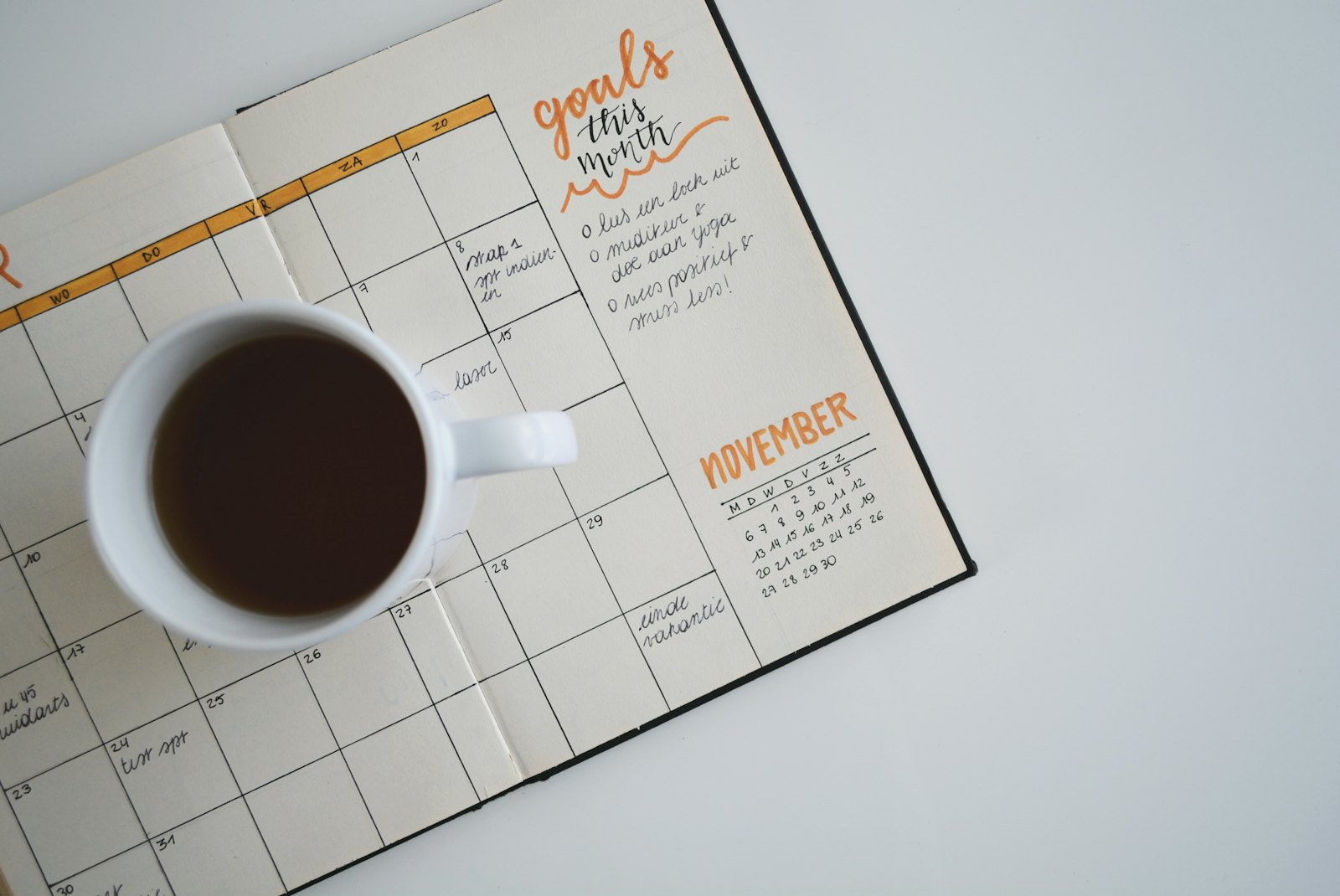
One row per gift: client, contact name, what you sent, when, why (the milestone), landed cost and any reaction (“emailed a photo of the team with it”). A spreadsheet is fine. Common mistake: recording only the item, not the reason or the reaction. Our client gift budget guide uses the same log for costs.
Step 2: Find this year’s milestone
Before thinking about the object, write down what happened this year that you’re thanking them for: a renewal, a hard project, a referral, an expansion, a tough quarter you got through together. That sentence goes in the card no matter what the gift is.
Step 3: Check the history and decide
Use the decision table. If they liked last year’s gift, a repeat with a “this is becoming our tradition” note is a legitimate choice. If you don’t know, ask. Common mistake: swapping a loved gift for a novelty out of fear of looking lazy.
Step 4: Change the part that should change
If the object repeats, change the note, the timing or a small addition linked to this year: a printed photo from the project, a short list of what the team accomplished together, a local treat from a city you visited for their work.
Step 5: Address people, not accounts
Check whether your contacts changed. A new contact gets a first-year thank-you, not a third-year one. Thank the people who did the work, by name, where their company allows it.
Step 6: Recheck policies
Gift rules change. A client that accepted gifts last year may have a new code of conduct. Ask your contact each cycle; it takes one email.
Step 7: Record the result
After the gift lands, update the history with any reaction. Next year starts from knowledge instead of guesswork.
What not to do
Don’t rely on the same pre-printed “Thanks for another great year!” card. The object can repeat; the words shouldn’t. For more on keeping the focus on thanks rather than selling, see client gifts that feel like thanks rather than a sales pitch.
How to make it personal
If you have 10 minutes
Write one sentence about the most important thing this client did with you this year. Put their contact’s name in it. That’s the opening line of your next card.
If you have a weekend
Build the gift history from whatever records you have (invoices, sent mail, card-shop receipts) for your top ten repeat clients, and mark which gifts got a reaction.
If you want it to last years
Turn one thing into a tradition on purpose: the same seasonal treat, the same week, with a new note each time naming that year’s milestone. Traditions are memorable because they repeat. The research on gifts people actually keep explains why the experience around a gift often matters more than the object.
The question to ask yourself: “If this client read all our cards side by side, would each one name something different that we did together?”
Frequently asked questions
Is it bad to give a client the same gift every year?
Not necessarily. If the client liked it, a repeated gift can become a tradition they look forward to. Steffel and LeBoeuf (2014) found givers overvalue uniqueness compared with recipients. Make the note new each time, naming that year’s shared milestone, so the repeat reads as intentional rather than forgotten.
How do I keep track of client gifts?
Use a simple log with one row per gift: client, contact, item, date sent, reason, cost and reaction. A shared spreadsheet works for most small businesses. Record why you sent it and how it landed, not just what it was; that’s what makes next year’s decision easy.
What do you give a client who already got your gift last year?
Start with what happened this year, then check your history. If they liked last year’s gift, repeat it with a new note. If you got no reaction or it didn’t fit, change it and ask about preferences. Build the gift or the card around this year’s milestone so it’s clearly about now.
How do I thank a long-term client in a meaningful way?
Name specific things they did, across the years if you can: the first project, the hard deadline, the referral. Long-term clients have a history with you; a note that shows you remember it means more than a bigger gift. Kumar and Epley (2018) found people underestimate how much such thanks means.
About the author
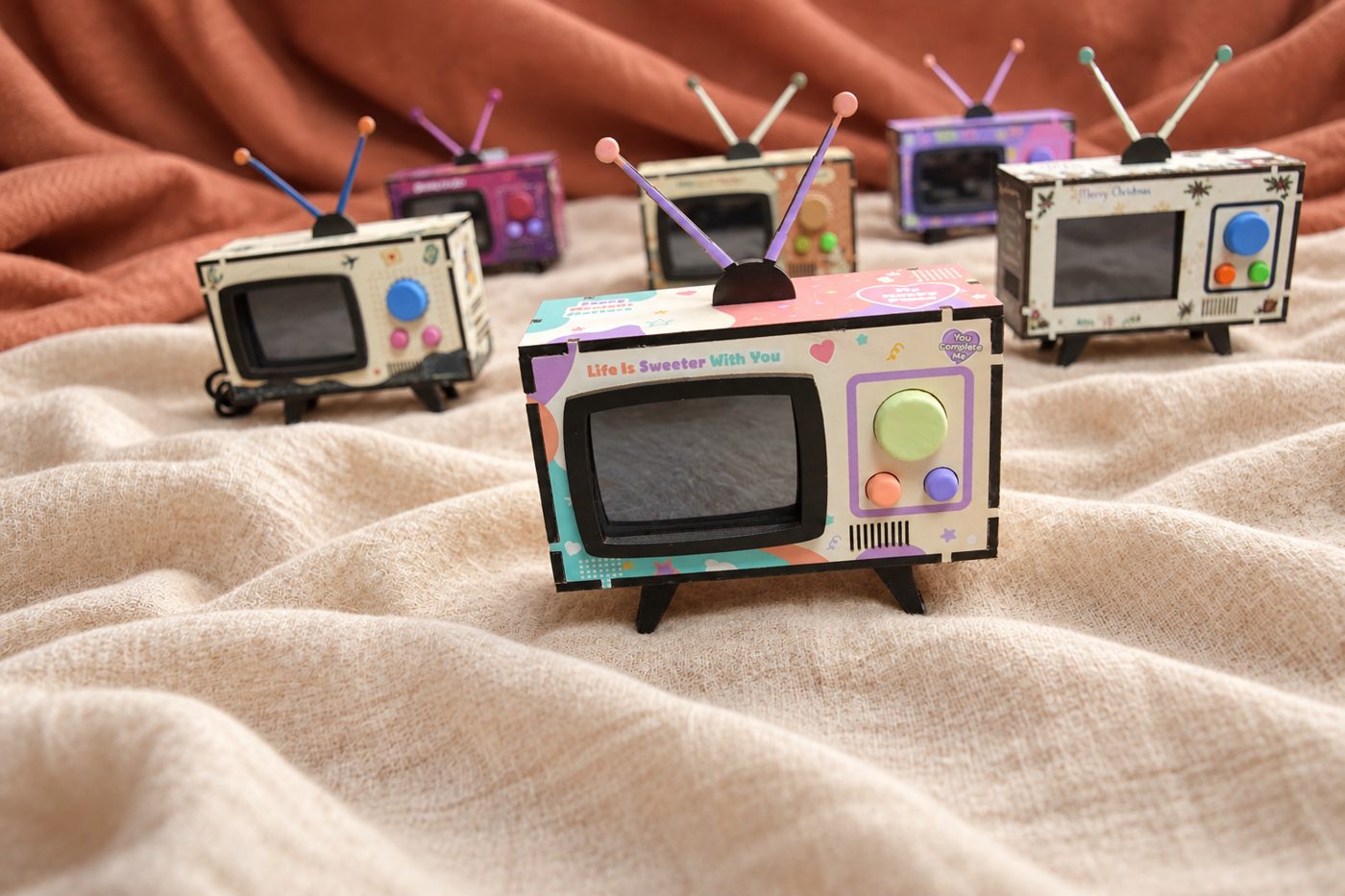
Ricky Flores is the founder of Watch N Wow and an electrical engineer with 15+ years of experience building consumer technology at Apple, Samsung, and Texas Instruments. In Dallas, Texas, he builds the Mini Memory TV by hand: a small retro TV that plays a video, a message and an original song made from your photos and your story. Read more at watchnwow.com.
Sources
- Steffel, M., & LeBoeuf, R. A. (2014). “Overindividuation in gift giving: Shopping for multiple recipients leads givers to choose unique but less preferred gifts.” Journal of Consumer Research, 40(6), 1167–1180. https://doi.org/10.1086/674199
- Gino, F., & Flynn, F. J. (2011). “Give them what they want: The benefits of explicitness in gift exchange.” Journal of Experimental Social Psychology, 47(5), 915–922. https://doi.org/10.1016/j.jesp.2011.03.015
- Givi, J., & Galak, J. (2017). “Sentimental value and gift giving: Givers’ fears of getting it wrong prevents them from getting it right.” Journal of Consumer Psychology, 27(4), 473–479. https://doi.org/10.1016/j.jcps.2017.06.002
- Algoe, S. B. (2012). “Find, remind, and bind: The functions of gratitude in everyday relationships.” Social and Personality Psychology Compass, 6(6), 455–469. https://doi.org/10.1111/j.1751-9004.2012.00439.x
- Kumar, A., & Epley, N. (2018). “Undervaluing gratitude: Expressers misunderstand the consequences of showing appreciation.” Psychological Science, 29(9), 1423–1435. https://doi.org/10.1177/0956797618772506
- Internal Revenue Service. Publication 463, Travel, Gift, and Car Expenses (Chapter 3, Gifts; Recordkeeping). https://www.irs.gov/publications/p463