Table of Contents
Father's Day 2027: Capture the Stories You Mean to Ask Dad
A Father's Day 2027 memory gift built from his stories: 20 questions about his life before you, a realistic recording schedule, and how to make a keepsake.
You’ve meant to ask him for years. How he met Mom. What his first job was. Why he left the town he grew up in, or why he stayed. What his own father was like. Every Father’s Day you think about it, and every Father’s Day you buy a shirt and a card instead, because the stories feel like a project and the shirt fits in a bag.
A Father’s Day 2027 memory gift built from his stories doesn’t have to be a project. It’s a handful of good questions, three or four short conversations, a phone set to record, and an afternoon assembling what he said into something he can keep. This guide gives you the questions, a realistic six-to-eight-week schedule, the interviewing advice folklorists use with their own families, and what the research says about why these stories matter, to him and to the people who’ll hear them later. Father’s Day in the US falls on the third Sunday in June.
Key Takeaways
- Young people who know their parents’ life stories use them to understand their parents, themselves and life lessons (Merrill, Booker & Fivush, 2019). Your kids will want his stories too.
- Children’s knowledge of family history correlates with higher self-esteem and better family functioning (Duke, Lazarus & Fivush, 2008).
- Voice connects more than text, and people underestimate that (Kumar & Epley, 2021). Record audio, not just notes.
- Ask about his life before he was Dad: childhood, first jobs, his parents, the decisions that set his course. Use photos and objects as prompts.
- Keep sessions short (20 to 40 minutes), relaxed (during a drive, a walk, a project) and spread over several weeks.
Why the stories never get asked
The questions people ask about this are wistful. “I always meant to ask my dad about his time in the army, and now I don’t know how to start.” “My dad isn’t a talker; how do I get him to open up?” “What questions should I ask my father before it’s too late?” “I don’t even know how my parents met.”
A few things get in the way. One is the framing. “I want to record your life story” sounds formal and a little ominous, as if you’re preparing for a funeral. Many fathers will deflect that. Another is the scale. “Tell me about your life” is too big a question to answer, so it gets a shrug. A third is timing. Father’s Day arrives, there’s no time to do it properly, and the stories wait another year.
Meanwhile the default gifts pile up. The National Retail Federation’s latest Father’s Day survey of 7,914 adults found greeting cards (60%), clothing (58%), a special outing (55%) and gift cards (52%) were the most common plans, with average planned spending at a record $226.58. Only 34% said creating a special memory was the most important factor. There’s nothing wrong with those gifts. They just don’t capture anything that would be lost.
Most fathers do want to be asked. They rarely say so.
What the research actually says
Parents’ stories help children understand themselves
Natalie Merrill, Jordan Booker and Robyn Fivush examined “intergenerational narratives,” the stories young people know about their parents’ lives, across three samples published in Topics in Cognitive Science in 2019. Adolescents and emerging adults could readily tell stories from their parents’ lives, including stories of parents’ proud moments, mistakes and self-defining experiences. Those stories served four functions: building the relationship with the parent, giving insight into the parent, giving insight into the self, and passing on life lessons.
That’s the case for asking about his failures and turning points, not only his achievements. The story of the job he quit, or the move that didn’t work out, is often the one that teaches.
Knowing family history is linked to well-being
Marshall Duke, Amber Lazarus and Robyn Fivush reported in Psychotherapy in 2008 that children’s and adolescents’ knowledge of their family’s history correlated with internal locus of control, higher self-esteem, better family functioning, greater family cohesion, lower anxiety and fewer behavior problems. The study is correlational, so it can’t show that hearing family stories causes those outcomes. But it suggests the stories you record from your father may matter to his grandchildren in ways beyond nostalgia.
Record his voice, not just his words
Amit Kumar and Nicholas Epley’s 2021 experiments in the Journal of Experimental Psychology: General found that voice-based interactions created stronger social bonds than text-based ones, without being more awkward, even though people expected them to be. Their studies involved live conversation, not recordings. But they point to something families discover anyway: a transcript of Dad’s story is useful, and a recording of him telling it, with his pauses and his laugh, is what people replay.
How folklorists interview their own families
The Smithsonian’s guide to collecting family folklore offers advice that transfers directly. Use natural settings where stories are already told, or create one; for private interviews, choose a relaxed activity like walking or working on something together rather than a formal sit-down. Start with a topic you know he’ll talk about fully. Avoid yes-or-no questions (“Nothing can kill an interview faster than a long series of questions that require only yes or no as answers”). Use props: photo albums, letters, heirlooms. Keep recording unless he asks you to stop, stop when he’s tired, label everything with names, dates and places, and remember the speaker generally holds the rights to his recorded words.
StoryCorps, which has recorded conversations between family members for years, publishes a list of question prompts organized by theme: growing up, parents, grandparents, family heritage, working, raising children. Several of the questions below are adapted from that list.
Many dads feel they didn’t get enough time
Pew Research Center’s 2019 summary of facts about American fathers reported that in a 2017 survey, 63% of fathers said they spend too little time with their children. For many fathers, a few hours of your undivided attention, asking about their life, is itself the gift.
Story-gift formats compared
Here’s how common ways of capturing a father’s stories compare.
| Format | Effort for you | Effort for Dad | What it preserves | Best for |
|---|---|---|---|---|
| Fill-in “Dad, tell me your story” journal | Low | High (he writes) | His words, if he finishes it | Dads who like to write |
| One long sit-down interview | Medium | Medium–high | A lot, but can feel formal | Talkative dads with stamina |
| Three or four short recorded conversations | Medium | Low | Voice, stories, his phrasing | Most dads |
| Recorded conversations + photos assembled into a keepsake | Higher | Low | Voice, faces, places, context | Gifts the whole family will replay |
| Video interview with lighting and cameras | High | Medium (self-conscious) | Face and voice | Dads comfortable on camera |
| Family-wide question collection (each person sends one question) | Medium | Low | Questions others care about | Large families, grandchildren |
Short recorded conversations, assembled with photos, are the sweet spot for most families: low effort for him, high value later.
How to capture your dad’s stories (six-to-eight-week schedule)
Step 1: Eight weeks out, choose 10 questions
Pick from the list below (or write your own) and narrow to about 10. Mix easy and deep. Why: a focused list keeps sessions short and gives you a plan. Common mistake: printing 100 questions and reading them like a survey.
Before he was Dad
- Where did you grow up, and what did your street or neighborhood look like?
- Did you have a nickname? How did you get it?
- What did you want to be when you grew up?
- What was your first job, and what did you spend your first paycheck on?
- Who was your best friend as a kid, and what did you get up to?
His parents and family
- What was your father like? Your mother?
- What’s something your parents taught you that you still use?
- What traditions came from your side of the family?
- What are the classic family stories you heard growing up?
Turning points
- How did you meet Mom (or my other parent)?
- What’s the hardest decision you’ve had to make?
- Was there a time you failed at something and it turned out for the best?
- Why did you move here, or why did you stay?
- What’s a risk you’re glad you took? One you wish you had?
Work and making things
- How did you get into your line of work?
- What lessons has your work life taught you?
- What’s something you built, fixed or made that you’re proud of?
Being a father
- What did you feel the day I was born?
- What was hardest about raising kids? What surprised you?
- What do you hope we remember about you?
Step 2: Seven weeks out, ask permission casually
Frame it as curiosity, not legacy: “I realized I don’t know much about when you were young. Can I ask you some questions and record them? I want the kids to hear it someday.” Why: consent matters, and a light framing avoids the “are you preparing my eulogy?” reaction. Common mistake: springing a recorder on him mid-conversation.
Step 3: Six to three weeks out, record three or four short sessions
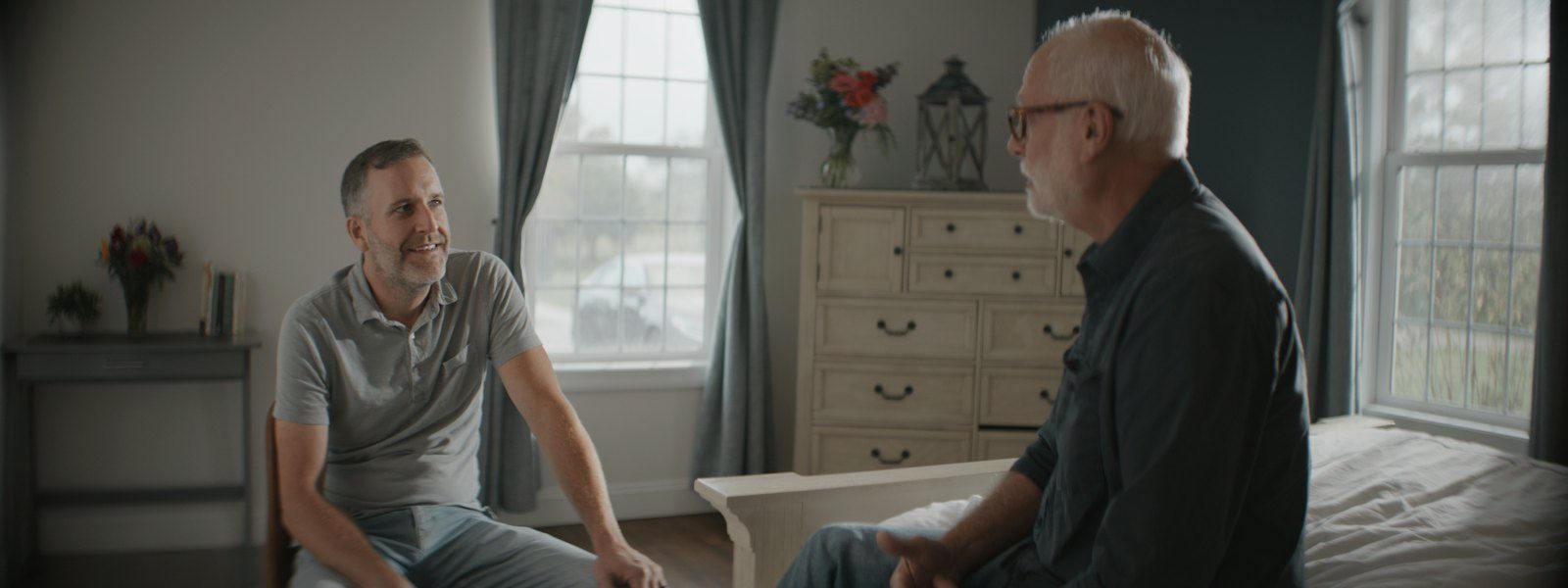
Twenty to forty minutes each, one theme per session. Do them during something else: a drive, a walk, washing the car, fixing the fence, cooking. Put your phone on voice memo and leave it running. Why: the Smithsonian guide favors relaxed activities and continuous recording; short sessions keep his energy up. Common mistake: one marathon session that exhausts him by question six.
Step 4: Use photos and objects as prompts
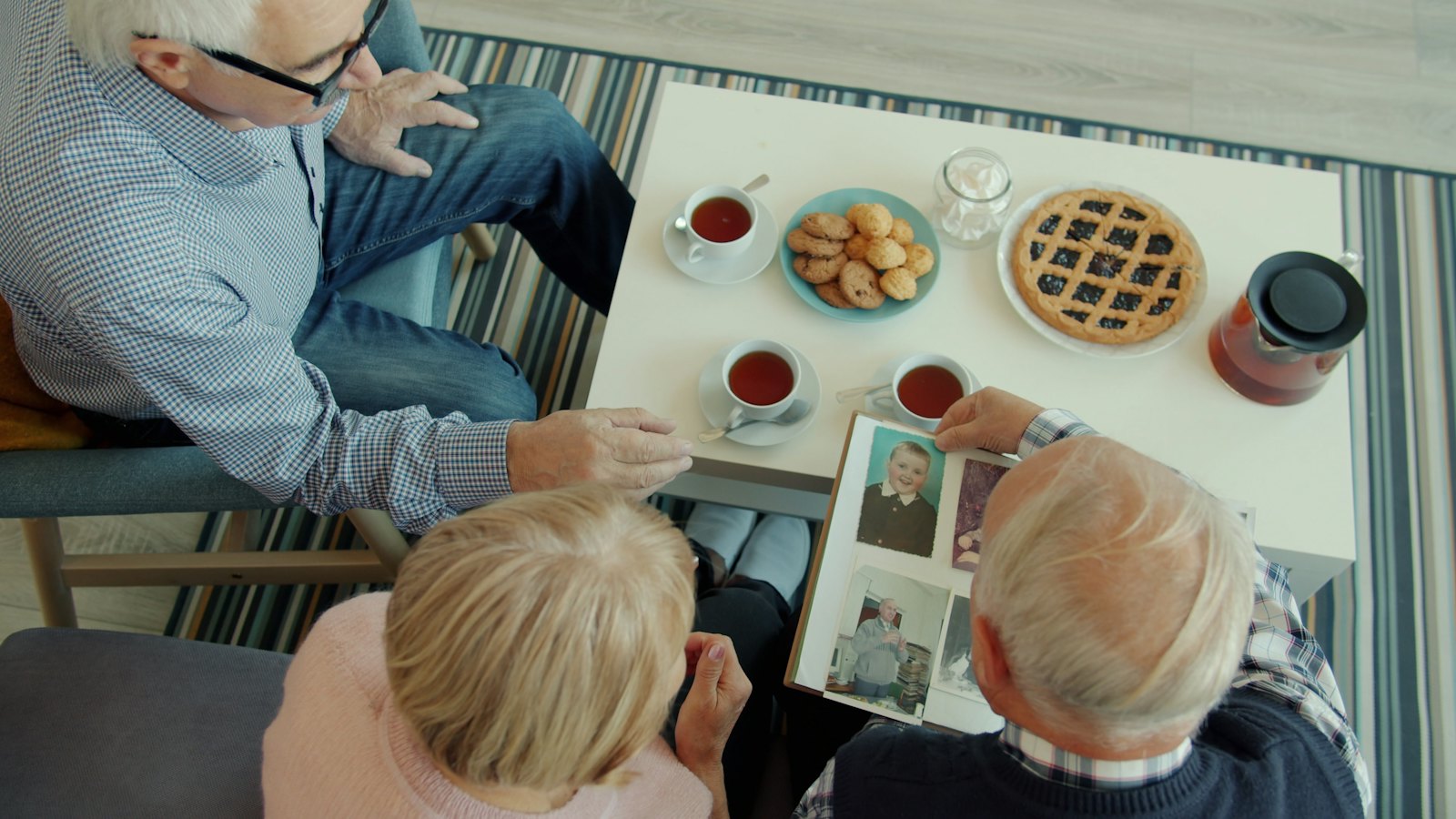
Bring an old photo, his first car’s keys, a medal, a letter, a record he loves. Ask, “Tell me about this.” Why: the folklorists’ “use props whenever possible.” Objects open up memories that direct questions don’t. Common mistake: relying only on questions.
Step 5: Follow the tangents
If he drifts from your question to a story about his uncle’s truck, let him. Ask “what happened next?” and “how did you feel?” Why: the guide warns against dominating the interview; the tangent is often the best material. Common mistake: steering him back to your list.
Step 6: Two weeks out, choose the best five to ten minutes
Listen back, mark the stories that made you laugh or stopped you cold, and trim them into short clips. Label each file with his name, the topic and the session. Why: a finished selection is what the family will actually replay; the full recordings go in the archive. Common mistake: giving him six hours of raw audio.
Step 7: Father’s Day, give it back to him
Pair the clips with photos from the eras he described, in a printed booklet with QR codes you’ve tested, a slideshow, a short video or a small album. Add a note: “I finally asked. Thank you for telling me.” Keep the full recordings backed up in three places. What not to do: share his recordings publicly or with the extended family before he’s heard the result and agreed.
How to make it personal
If you have 10 minutes
Text him one question tonight: “Random question, what was your first job?” If he answers, you’ve started. Save the answer.
If you have a weekend
Record one 30-minute conversation during a drive or a project, using one old photo as a prompt. Pick the best three-minute story and send it to your siblings.
If you want it to last years
Make it a Father’s Day tradition: one new theme each year, recorded and added to the collection. Invite grandchildren to ask one question each. Over time it becomes the family’s best record of him, in his own voice. If your father is a new dad himself, our guide to a first Father’s Day gift built from everyday moments starts the record from the other end. And for why his voice will matter so much later, see this blog’s piece on why a personal song hits differently.
The question to ask yourself: “If my kids wanted to know who their grandfather was, would they hear it from him?”
Frequently asked questions
When is Father’s Day 2027?
In the United States, Father’s Day is always the third Sunday in June. Mexico and many other countries also celebrate on the third Sunday of June, though some countries use other dates. Start collecting stories six to eight weeks ahead so you’re not rushing.
What questions should I ask my dad about his life?
Start with his life before he was a father: where he grew up, his nickname, his first job, his best friend, what his parents were like. Then turning points: how he met your other parent, his hardest decision, a failure that turned out well. Avoid yes-or-no questions and use old photos as prompts.
How do I get my dad to open up?
Ask during an activity, like a drive, a walk or a project, rather than a formal interview. Start with a topic he already enjoys talking about. Use photos or objects as prompts. Keep it short and let him wander off topic. Many quiet fathers talk freely once the conversation doesn’t feel like an interview.
How do I record my dad’s stories?
A phone’s voice memo app is enough. Place it near him, leave it running for the whole conversation, and record in a quiet spot. Label files with his name and the topic, back them up in three places, and trim the best stories into short clips for the gift.
What is a good Father’s Day gift that isn’t stuff?
His own stories, recorded and returned to him as a keepsake. Others: a day doing something together, a handwritten letter naming specific things he did for you, or a family meal he doesn’t have to plan. Research suggests many fathers feel they didn’t get enough time with their kids, so time and attention land well.
If you’d like his stories turned into an original song and a short video with your photos, played on a small retro TV he can keep on a shelf, that’s what we make at Watch N Wow.
About the author
Ricky Flores is the founder of Watch N Wow and an electrical engineer with 15+ years of experience building consumer technology at Apple, Samsung, and Texas Instruments. In Dallas, Texas, he builds the Mini Memory TV by hand: a small retro TV that plays a video, a message and an original song made from your photos and your story. Read more at watchnwow.com.
Sources
- Merrill, N., Booker, J. A., & Fivush, R. (2019). “Functions of parental intergenerational narratives told by young people.” Topics in Cognitive Science, 11(4), 752–773. https://doi.org/10.1111/tops.12356
- Duke, M. P., Lazarus, A., & Fivush, R. (2008). “Knowledge of family history as a clinically useful index of psychological well-being and prognosis: A brief report.” Psychotherapy: Theory, Research, Practice, Training, 45(2), 268–272. https://doi.org/10.1037/0033-3204.45.2.268
- Kumar, A., & Epley, N. (2021). “It’s surprisingly nice to hear you: Misunderstanding the impact of communication media can lead to suboptimal choices of how to connect with others.” Journal of Experimental Psychology: General, 150(3), 595–607. https://doi.org/10.1037/xge0000962
- Smithsonian Institution. “The Interview,” from Family Folklore: How to Collect Your Own Family Folklore. https://smithsonianeducation.org/Migrations/seek2/iview2.html
- StoryCorps. “Great Questions.” https://storycorps.org/participate/great-questions/
- National Retail Federation & Prosper Insights & Analytics (2026). “Father’s Day spending to hit record $27.9 billion.” https://nrf.com/media-center/press-releases/father-s-day-spending-to-hit-record-27-9-billion
- Livingston, G., & Parker, K. (2019). “8 facts about American dads.” Pew Research Center. https://www.pewresearch.org/short-reads/2019/06/12/fathers-day-facts/