Table of Contents
Friendship Anniversary Gifts When You Don't Know the Date
How to plan friendship anniversary gifts without an exact date: pick a milestone or tradition, revisit one memory and start a ritual. A research-backed guide.
Couples get anniversaries. Friends get “wait, how long have we known each other? Since sophomore year? No, it was the summer you worked at the pool.” Nobody wrote it down. There was no first date, no ring, no ceremony. And yet some of these friendships have outlasted marriages, jobs and three changes of city.
Here is the short answer: you don’t need the exact day to give friendship anniversary gifts. Pick a shared milestone or a recurring tradition, attach one specific memory to it, and make it a small ritual you can repeat. Research on rituals suggests the act of repeating it with intention is what makes it feel meaningful, not the calendar.
Key Takeaways
- Rituals help regulate emotions, performance and social connection, according to a major integrative review (Hobson et al., 2018). A friendship anniversary is a ritual you design yourselves.
- In four experiments, performing a short ritual before eating made food taste better and feel more worth savoring, and doing the ritual yourself mattered more than watching it (Vohs, Wang, Gino & Norton, 2013).
- Recalling shared autobiographical memories increased feelings of warmth toward a partner, regardless of age or gender (Alea & Bluck, 2007). Reminiscing is relationship maintenance.
- Gratitude helps people “find, remind and bind” to responsive partners (Algoe, 2012). A friendship anniversary is a natural place to say thank you.
- Practical rule: choose the date, name the memory, repeat the ritual.
The problem: real friendships rarely have a start date
People searching for friendship anniversary ideas often admit the awkward part first. “We’ve been best friends for ten years but I have no idea when we met.” “Is it weird to celebrate a friendiversary?” “I want to do something for her, but it’s not her birthday and there’s no occasion.” “We used to have a tradition and it fell apart after we both had kids.”
The missing date is a real obstacle, but only because we copied the romantic template. Couples anniversaries are anchored in a public event. Friendships form gradually, which is part of what makes them sturdy. There is rarely a single moment you can point to.
The good news is that you can choose one. Families do this constantly: holiday traditions, the Sunday call, the dish that only appears at one gathering. A friendship can have the same. The anniversary doesn’t commemorate the day you met. It commemorates the friendship, on a day you agree means something.
What the research says about rituals and shared memory
Rituals do emotional and social work
Nicholas Hobson, Juliana Schroeder, Jane Risen, Dimitris Xygalatas and Michael Inzlicht published an integrative review of the psychology of rituals in Personality and Social Psychology Review (2018). They organized the evidence around three regulatory functions of rituals: regulating emotions, regulating performance goal states and regulating social connection. Some of the effect comes from the physical features of rituals (repetition, fixed sequences) and some from their psychological meaning.
For friends, the social-connection function is the one that matters. A shared ritual says “this is ours” in a way a one-off gift can’t.
Doing a ritual makes the experience better
Kathleen Vohs, Yajin Wang, Francesca Gino and Michael Norton tested this directly in Psychological Science (2013). In four experiments, people who performed a short ritual before eating chocolate, lemonade or even carrots rated the food as more flavorful and more worth savoring. Random gestures didn’t produce the same boost; it had to be ritualistic. A delay between ritual and consumption increased enjoyment. And performing the ritual yourself worked better than watching someone else do it, because rituals increase involvement in the experience.
These were lab experiments with food, not friendships. But they suggest a design principle: a friendship anniversary works better if you both do something together, in a set way, rather than one person handing over a gift.
Remembering together brings warmth
Nicole Alea and Susan Bluck tested whether autobiographical memory serves to maintain intimacy, in Applied Cognitive Psychology (2007). They had 129 young and older adults recall either real events from their relationship or fictional vignettes. Warmth toward the partner increased after recalling real shared events, regardless of age or gender, and the personal significance of the memory was the best predictor of warmth and closeness.
The participants were romantic couples, not friends, so the leap to friendship is ours. But reminiscing is a familiar part of friendship, and the mechanism (personally significant shared memories increase warmth) has no obvious reason to stop at couples.
Gratitude binds people who show up for each other
Sara Algoe’s “find, remind and bind” theory, laid out in Social and Personality Psychology Compass (2012), argues that gratitude helps people find good relationship partners, reminds them of existing good relationships, and binds them closer through upward spirals of mutually responsive behavior. It is about the people we interact with every day, not only romantic partners.
Families already know how to invent traditions
Barbara Fiese and colleagues reviewed 50 years of research on family routines and rituals in the Journal of Family Psychology (2002). They distinguished routines (observable practices) from rituals (symbolic representations of collective events), and found both linked to parenting competence, child adjustment and marital satisfaction, while noting methodological limits. Families don’t wait for an official date to create meaning; they repeat things until the repetition becomes the meaning.
Ways to choose the anniversary, compared
| Anchor | Example | Strengths | Watch out for |
|---|---|---|---|
| The day you met (if known) | First day of 9th-grade biology | Clear, unique | Often unknown or disputed |
| A shared milestone | The day you both moved to Dallas; the trip that made you close | Has a story attached | May be tied to a hard period; check it feels good |
| A recurring tradition | The annual fall bonfire; the first Saturday in December | Already a ritual; easy to repeat | Can lapse when life changes |
| A symbolic date | Halfway between your birthdays | Fair, playful | No story unless you add one |
| A season, not a day | ”Every first snowfall” or “the week school starts” | Flexible for busy lives | Easy to miss without a reminder |
There is no right row. The anchor matters less than agreeing on it together and repeating it.
How to plan a friendship anniversary, step by step
Step 1: Agree on the date together
Ask your friend: “When do you think we became friends?” The conversation is half the gift. If you remember differently, pick the version with the better story, or choose a symbolic date. Why: the Vohs studies found personal involvement drives the ritual effect; choosing the date together is involvement. Common mistake: announcing a date your friend doesn’t remember. It can feel like a quiz.
Step 2: Name one specific shared memory
Pick one memory, not a montage. The night the car broke down outside San Antonio. The terrible karaoke. The hospital waiting room. Write it in three sentences. Why: in Alea and Bluck’s study, the personal significance of the recalled memory best predicted warmth. Common mistake: a generic “all our good times” message that could fit any friendship.
Step 3: Design a small ritual you will both do
Make it repeatable and specific: the same restaurant, the same photo in the same spot every year, a letter exchanged and opened together, a hike to the same lookout. Add a fixed sequence (toast first, then the photo, then the letter). Why: rituals regulate social connection (Hobson et al., 2018), and the ritualistic, fixed sequence mattered in Vohs’s experiments. Common mistake: something so elaborate it dies the first year someone has a newborn.
Step 4: Add a thank-you
Write one thing you are grateful for that your friend did, specifically. Why: gratitude reminds and binds people to responsive partners (Algoe, 2012). Common mistake: turning gratitude into debt (“I owe you so much”). Keep it about appreciation.
Step 5: Give it a small, keepable object
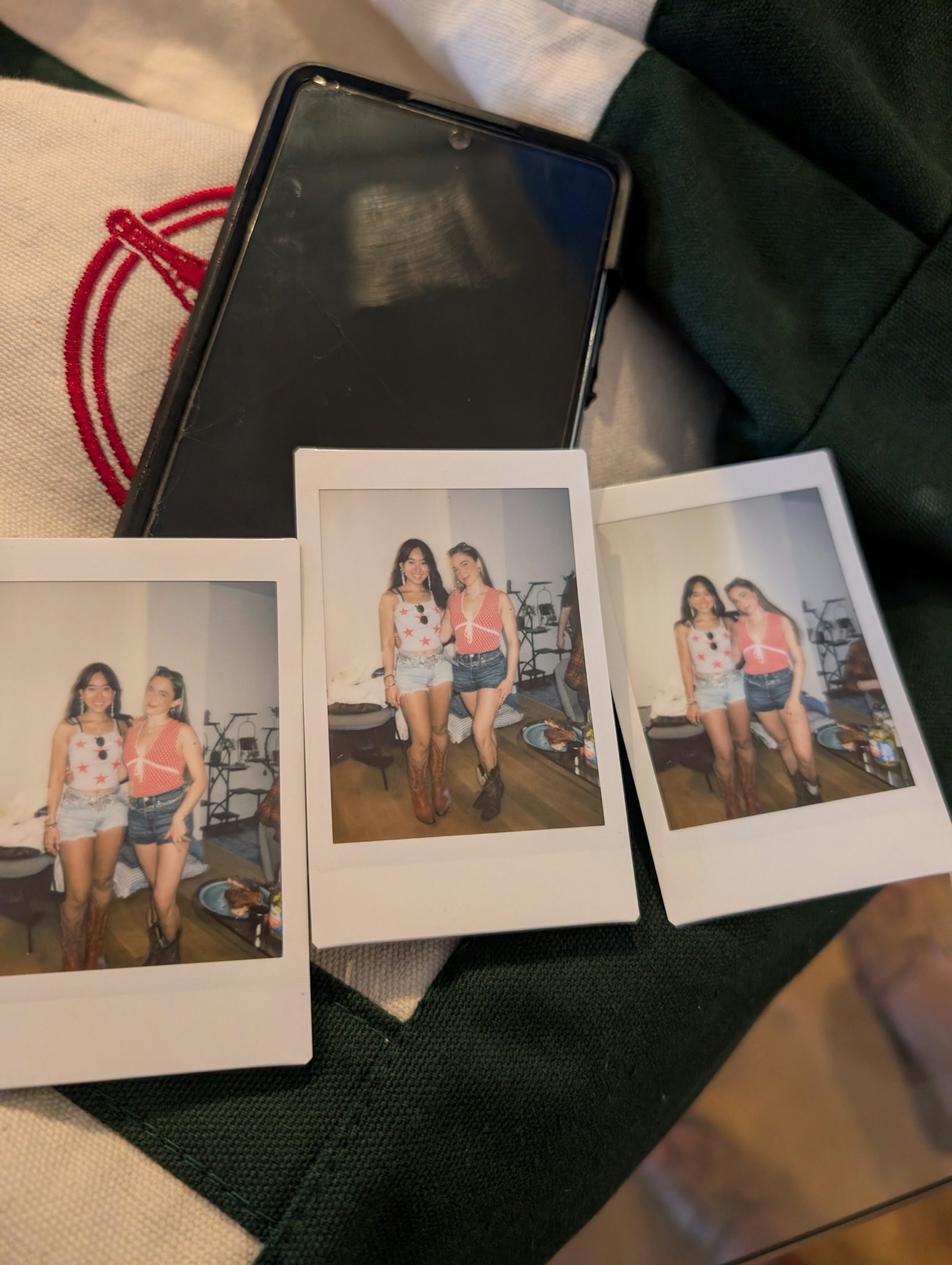
A printed photo from this year’s ritual with the date on the back. A shared playlist with the year in the title. A jar of notes you add to annually. The object marks the ritual and accumulates value. Why: a physical keepsake carries the memory forward; see how nostalgia makes a gift feel bigger. Common mistake: a big gift that creates pressure to match it next year.
What not to do
Don’t use the anniversary to audit the friendship (“you never call”). And don’t make it public if your friend is private; a ritual between two people doesn’t need an audience.
How to make it personal
If you have 10 minutes
Text your friend: “When do you think we became friends?” Write down their answer and yours. That is the beginning of a tradition.
If you have a weekend
Pick the memory, write three sentences about it, and find one photo from that time. Plan the first ritual: a place, a sequence, a time of year. If you live far apart, our guide to a long-distance best friend birthday gift has ideas for rituals over video.
If you want it to last years
Keep a single record: a photo in the same spot each year, a notebook you write in together, a jar of notes. Date every entry. In ten years the collection becomes a record of the friendship itself. If one of your shared memories is a trip, see our ideas for travel keepsakes that do more than list where you went.
The question to ask yourself: “Is this something we’ll both want to repeat next year, or something I’m doing once to prove I care?”
Frequently asked questions
What is a friendship anniversary?
A day friends choose to celebrate the friendship itself, since most friendships have no official start date. It can be the day you met, a shared milestone, a recurring tradition or a symbolic date. Research on rituals (Hobson et al., 2018) suggests the repeated, intentional celebration matters more than the exact date.
Is it weird to celebrate a friendiversary?
Not if both people enjoy it. Ask your friend what they think the date is; the conversation itself is often the best part. Keep it low pressure: a small ritual you both do, one specific memory and a thank-you. Remembering shared events tends to increase warmth (Alea & Bluck, 2007).
What are good friendship anniversary gifts?
Small, specific and repeatable: a photo taken in the same spot every year, a letter opened together, a shared playlist named for the year, a jar of notes you add to annually, or a meal at the place where the friendship started. The gift matters less than the ritual and the memory attached to it.
How do I celebrate if we don’t live in the same city?
Make the ritual work over video: the same dessert eaten on a call, letters mailed to arrive the same day and opened together, a photo taken in each city at the same hour. Doing the ritual yourself, not watching, is what made rituals effective in Vohs and colleagues’ experiments.
If you’d like the photos, the memory and a message for your friend turned into a short video with an original song on a small retro TV, that is what we make at Watch N Wow.
About the author
Ricky Flores is the founder of Watch N Wow and an electrical engineer with 15+ years of experience building consumer technology at Apple, Samsung, and Texas Instruments. In Dallas, Texas, he builds the Mini Memory TV by hand: a small retro TV that plays a video, a message and an original song made from your photos and your story. Read more at watchnwow.com.
Sources
- Hobson, N. M., Schroeder, J., Risen, J. L., Xygalatas, D., & Inzlicht, M. (2018). “The psychology of rituals: An integrative review and process-based framework.” Personality and Social Psychology Review, 22(3), 260–284. https://doi.org/10.1177/1088868317734944
- Vohs, K. D., Wang, Y., Gino, F., & Norton, M. I. (2013). “Rituals enhance consumption.” Psychological Science, 24(9), 1714–1721. https://doi.org/10.1177/0956797613478949
- Alea, N., & Bluck, S. (2007). “I’ll keep you in mind: The intimacy function of autobiographical memory.” Applied Cognitive Psychology, 21(8), 1091–1111. https://doi.org/10.1002/acp.1316
- Algoe, S. B. (2012). “Find, remind, and bind: The functions of gratitude in everyday relationships.” Social and Personality Psychology Compass, 6(6), 455–469. https://doi.org/10.1111/j.1751-9004.2012.00439.x
- Fiese, B. H., Tomcho, T. J., Douglas, M., Josephs, K., Poltrock, S., & Baker, T. (2002). “A review of 50 years of research on naturally occurring family routines and rituals: Cause for celebration?” Journal of Family Psychology, 16(4), 381–390. https://doi.org/10.1037/0893-3200.16.4.381