Table of Contents
Nostalgic Gifts: Why Looking Back Makes a Gift Feel Bigger
Nostalgia research says looking back builds meaning and connection. Why nostalgic gifts work, the three cases where they backfire, and how to give one well.
The group chat has been going for three days. Dad turns 60 next month, and the options on the table are a smoker, a watch, and “an experience.” Then your sister sends a scan of a photo from the summer of 1994: Dad at the lake, sunburned, holding you upside down by the ankles, both of you laughing. The chat goes quiet. Someone types “ok, that’s the gift.” Someone else types “isn’t that kind of sad, though?”
That second message is the whole problem with nostalgic gifts. We feel them land, and we also suspect they’re cheesy, a little sad, or a fallback for people who ran out of ideas. Two decades of research on nostalgia says the opposite. Looking back is one of the most useful things a mind does, and a gift that triggers it well is doing measurable work: for mood, for connection, and for the sense that a life adds up to something.
Key Takeaways
- For two centuries nostalgia was a diagnosis. Since the mid-2000s, controlled studies have found that it lifts mood, self-regard and social connection, and raises people’s sense that life has meaning (Wildschut et al., 2006; Routledge et al., 2011).
- The nostalgic gifts that work are specific: one year, one song, one photo with a person in it. “Retro” and “vintage” point at an era; a gift that lands points at a moment someone was actually in.
- Music is the strongest trigger studied so far. Songs from a person’s childhood and teens engage the brain region that binds music to self-relevant memory (Janata, 2009), and they feel most nostalgic when they are personally tied to the listener (Barrett et al., 2010).
- Photos preserve what we saw and drop what we heard (Barasch et al., 2017). The fastest upgrade to a photo gift is adding the sound back: a voice, a song, one sentence.
- Nostalgia backfires when the past no longer connects to the present: fresh grief, an estranged relationship, a chronic worrier, or a memory forced on someone in public. In those cases, ask first or wait.
Why we talk ourselves out of nostalgic gifts
Scroll any thread where people ask for sentimental gift ideas and the same worries show up. “I don’t want to make my mom cry at her own party.” “My husband says he doesn’t want anything, and he means it.” “Isn’t a photo of her late dad kind of morbid for a birthday?” “My brother isn’t the sentimental type.” And the big one, usually unspoken: “Is this gift about her, or about me?”
Part of the hesitation is the word itself. Nostalgia started life in the 1600s as a medical diagnosis for homesick Swiss soldiers, and it kept that clinical shadow for a very long time. Even now, “nostalgic” is half compliment and half eye-roll. Nobody wants to be the aunt who makes everything about the old days.
The other part is that the category has been flattened into merchandise. Search “gifts that bring back memories” and you get retro candy boxes, reissued handheld consoles, 90s scrunchie packs, a record of the chart from the year someone was born. Those can be fun. But they trigger a decade, not a person, and the person opening them can tell the difference in about a second. A box of the candy you ate in 1996 says “you were young once.” A photo of you and your grandmother shelling peas on one specific porch says “this happened, and I was there.”
So the fear of being cheesy is reasonable. It’s the fear of giving someone an era when you meant to give them a moment. The research on nostalgia explains why the second kind feels bigger, and it also explains the handful of situations where even a well-chosen memory should stay in the drawer a while longer.
What the research actually says
Nostalgia is a sentimental longing for one’s own past, and in the lab it behaves like a resource rather than a mood disorder. That reframe is the central claim of a 2008 review in Current Directions in Psychological Science by Constantine Sedikides, Tim Wildschut, Jamie Arndt and Clay Routledge, the four researchers who built most of the modern evidence base. They describe nostalgia as “a predominantly positive, self-relevant, and social emotion serving key psychological functions”: it lifts mood, raises self-regard, strengthens social bonds and reduces existential anxiety.
That review rests on a 2006 paper in the Journal of Personality and Social Psychology by the same team, which ran seven studies around three plain questions. What is nostalgia made of? What triggers it? What does it do?
The content answer matters most for gift-givers. When people wrote out a nostalgic memory, the typical story had the writer as the main character, surrounded by close others, often at a momentous event such as a wedding. The memories held more positive than negative feeling, and many followed a redemption arc: something went wrong, then something went right. The trigger answer: nostalgia showed up in response to low mood and, specifically, loneliness. The function answer: inducing nostalgia made people feel more socially connected, think better of themselves and feel better overall. Look at the shape of that. Nostalgia is set off by feeling low and then pushes back against it. That is a repair mechanism, not a symptom.
A 2011 follow-up in the same journal, led by Routledge with seven co-authors, took the idea further across six studies. People who felt more nostalgic reported more meaning in life (Study 1). Inducing nostalgia raised meaning in life (Study 2), and in both cases the effect ran through social connectedness: feeling close to people is how the memory does its work. Threatening people’s sense of meaning made them more nostalgic (Study 3), nostalgia made them less defensive after such a threat (Study 4), and it protected well-being when meaning was low (Studies 5 and 6). The authors put it plainly: “the provision of existential meaning is a pivotal function of nostalgia.”
The usual caveats apply. Most participants were university students, the nostalgia was produced on request by writing about a memory, and the outcomes were self-reported. That is roughly the kind of nostalgia a gift creates (requested, specific, shared), which is encouraging. It is not the same as what nostalgia does when it ambushes someone on a Tuesday. More on that below.
Why a song from one specific year does so much
Music is the trigger with the clearest brain evidence. In a 2009 study in Cerebral Cortex, Petr Janata scanned 13 university students while they listened to 30-second excerpts of songs that had been popular when they were between 7 and 19 years old. Activity in the dorsal medial prefrontal cortex rose with how autobiographically salient each song was, and the same region tracked the song’s movement through tonal space, more strongly for songs tied to a personal memory. Janata’s reading is that this region works as a hub, binding the music, the memory and the emotion together. Thirteen people is a small sample, and they were all students, but the finding has held up as a reference point in the field.
A 2010 study in Emotion by Frederick Barrett, Janata, Wildschut, Sedikides and colleagues played people randomly chosen excerpts of popular music and asked how nostalgic each one made them feel. Nostalgia was stronger when a song was autobiographically salient, familiar and arousing, and when it stirred up more emotions of every kind: positive, negative and mixed. Nostalgic songs were associated with joy and sadness at the same time. Songs that evoked nothing were associated with irritation. That mix is the texture of a good nostalgic gift. It is not supposed to feel purely happy.
What photos keep and what they drop
Two studies in Psychological Science complicate the idea that a camera roll is a memory bank. In Linda Henkel’s 2014 museum study, visitors who photographed objects as a whole remembered fewer of them, fewer details and fewer locations than visitors who only looked, a result she named the “photo-taking-impairment effect.” But when visitors zoomed in to photograph one specific part of an object, the impairment vanished, and their memory for the parts they had not zoomed in on was just as strong. Attention, not the camera, is what laid the memory down.
Then a 2017 paper by Alixandra Barasch, Kristin Diehl, Jackie Silverman and Gal Zauberman, across one field study and three lab studies, found that people who could freely take photos during an experience later recognised more of what they had seen and less of what they had heard, even without looking at the photos again. Merely taking “mental photos” did the same thing. Photos shift attention toward the visual and away from the sound. Which means the sound, the part a person’s own memory may have lost, is the part a gift can give back.
Why a thing you can hold counts as part of you
Finally, the oldest paper here. In “Possessions and the Extended Self” (Journal of Consumer Research, 1988), Russell Belk argued that “our possessions are a major contributor to and reflection of our identities.” In that framework a keepsake is not a reminder sitting next to a person. It is a piece of the self kept outside the body. That is why a nostalgic gift in physical form reads differently from the same photo sent as a link. One is a message. The other becomes part of the furniture of who someone is.
Six beliefs about nostalgic gifts, checked against the studies
Here is where common sense about sentimental gifts matches the evidence, and where it doesn’t.
| Common belief | What the research shows | Source |
|---|---|---|
| Nostalgia is a sad, backward-looking mood | Nostalgic memories carry more positive than negative feeling, and inducing nostalgia raises mood, self-regard and social connection | Wildschut et al., 2006 |
| Nostalgia is a weakness, something lonely people do | Loneliness and low mood trigger it, and it then counteracts them. It works like a repair mechanism | Wildschut et al., 2006; Sedikides et al., 2008 |
| A nostalgic gift is “just a nice memory” | Nostalgia raises the sense that life has meaning, and the effect runs through feeling connected to others | Routledge et al., 2011 |
| Any song from their era will do | Nostalgia is strongest for songs personally tied to the listener’s life; the brain region involved tracks personal salience, not the chart | Janata, 2009; Barrett et al., 2010 |
| More photos means more memory | Photographing whole scenes impaired memory; photos keep the visual and drop the audio | Henkel, 2014; Barasch et al., 2017 |
| Nostalgia is always good for you | In daily life it tracks lower well-being; when the present is cut off from the past, or the person chronically worries, it can hurt | Newman et al., 2020; Iyer & Jetten, 2011; Verplanken, 2012 |
The first five rows point the same direction: specificity. The memory that does the work has a person in it, a moment in it, and ideally a sound in it. The sixth row is the one the gift listicles skip, and it deserves its own section.
When a nostalgic gift backfires
A nostalgic gift backfires when the memory it opens no longer connects to the life the person is living now. The research points to three versions of this, and all three show up at real birthdays and real funerals.
The thread is cut. In a 2011 study in the Journal of Personality and Social Psychology, Aarti Iyer and Jolanda Jetten followed students entering university through a longitudinal survey and two experiments. When the students felt their identity was continuous with their past, nostalgia did its usual good. When continuity was low, feeling nostalgic lowered well-being, reduced their perceived ability to cope, and reduced their interest in new opportunities. Translate that out of the lab: a fresh loss, a divorce, an estrangement, a move across a border that hasn’t settled, a retirement nobody chose. “Remember when” to someone who can’t get back there can read as “look what you lost.”
Memorial gifts come up constantly in this category, and the research does not say never. It says timing and continuity. In the first weeks after a death, the thread between past and present is cut, and a photo can land as a wound. A year or three later, the same photo can be the proof that the thread is still there. If you are unsure, give it privately, say they can open it whenever they want, and mean it.
The person is a chronic worrier. A 2012 study in the European Journal of Social Psychology by Bas Verplanken induced nostalgia through visual imagery and found that habitual worriers got an initial lift, then showed more anxiety and depressive symptoms afterward. His proposed mechanism: a carefree past set against a chronically anxious present feeds rumination. One lab, one study. But if the person you are giving to lies awake replaying things, a gift that says “life used to be simpler” may not be the kindness it looks like.
The nostalgia arrives uninvited. A 2020 paper by David Newman, Matthew Sachs, Arthur Stone and Norbert Schwarz, also in JPSP, built a scale to measure nostalgia in daily life rather than in the lab. On request, nostalgia looked positive, as in the earlier studies. As it occurred naturally through the day, it was negatively related to well-being that day and the next. For gift-givers the lesson is about control. A gift is requested nostalgia, the good kind, as long as the person decides when to open it. The failure mode is forced reminiscence: a slideshow at a party where someone has to perform a reaction in front of 40 guests, or a photo hung where they will walk past it twenty times a day whether they feel up to it or not.
What to actually do
Pick a year, not an era
The brain region in Janata’s study responded to how much a song belonged to the listener’s own life, not to how old it was. So “the 80s” is weak and “the summer of 1987, when you two drove to the coast in the car with no air conditioning” is strong. Ask a sibling, a cousin, an old friend: what year did it all happen? Then build the gift from that year’s songs, that year’s photos, that year’s slang. Specificity reads as effort because it is effort.
Put a person in the frame
The nostalgic memories people wrote about in Wildschut’s studies had the self at the centre, surrounded by close others, at moments that mattered. A photo of a landscape is pretty. A photo of your mother at 24 standing in that landscape, holding you, is nostalgic. If you have to choose between the technically better picture and the one with the right people in it, choose the people. Blurry is fine.
Give the sound back
Barasch and colleagues found photos preserve what we saw and drop what we heard. So the gift that feels bigger than a photo is a photo with sound attached: a voice note from a grandparent describing the day, a recording of the song that was playing, the family saying one sentence each. Music does the heaviest lifting here, and there is a reason a song written for one person, with their name in it, hits harder than a playlist: it is autobiographically salient by construction.
Zoom in on one detail and say what it is
Henkel’s visitors who zoomed in on a detail remembered better, because attention laid the memory down. Do the same with a gift. Don’t give 200 photos. Give one, and write the detail nobody else would notice: “That’s the dent in the truck from the time you backed into the mailbox and told Grandpa it was hail.” Specific details are what separate a memory from a stock image of one. If your best photos are still buried in a phone, start by rescuing the right 60 seconds, not the whole library.
Draw the line from then to now
Iyer and Jetten’s finding cuts both ways. Nostalgia helps when the present feels connected to the past, so help it connect. Pair the 1994 lake photo with one from last summer in the same spot. Put the wedding song next to the song from the 30th anniversary. The message is not “those were the days” but “this is still going.” Gifts with a moment attached last longer for the same reason: the moment gives the object a place in a continuing story.
Let it be bittersweet
Barrett’s study found nostalgic songs carried joy and sadness together, and the songs that evoked nothing carried irritation. Don’t scrub the sadness out. If the memory includes someone who is gone, say so in the gift instead of pretending the photo is only happy. The bittersweet version is the honest version, and people can tell.
What not to do
Don’t make them perform it. A private first viewing beats a public reveal; let them bring it to the party if they want to. Don’t give an era when you mean a person: retro candy and reissued toys say “you were young,” not “I was there.” And don’t deliver the past to someone whose present is on fire. Fresh grief, a recent split, a chronic worrier: ask, or wait, or give it with the explicit permission to leave it in the box until they are ready.
How to make it personal
If you have 10 minutes
Write down one memory in three sentences, with a year, a place and one detail only you would know. Then find the single photo closest to it in your phone. That’s the gift’s spine; everything else is packaging.
If you have a weekend
Text five relatives and ask for their one favourite photo of the person and the story behind it. Record a 30-second voice note from each of them. Find the song that was actually playing in the house that year, not the song that charted. By Sunday night you have a short film’s worth of material, and most of it would otherwise have stayed in five separate phones.
If you want it to last years
Keepsakes that survive have four things: a physical form (Belk’s point about possessions becoming part of the self), the person’s name or face in them, a moment attached, and something they will replay. Replay is the one people forget. A photo gets looked at once a year. A song with their name in it, sitting on a shelf where they can press play, gets replayed, and every replay is requested nostalgia, which is the kind the studies found does good. The best nostalgic gifts are built to be opened again, on the recipient’s terms.
The question to ask yourself: “Am I handing them their memory, or asking them to hold mine?”
Frequently asked questions
Why does nostalgia feel so good?
Because it repairs something. Wildschut and colleagues (2006) found nostalgia is triggered by low mood and loneliness, and then raises mood, self-regard and the feeling of being connected to others. Routledge and colleagues (2011) found it also raises the sense that life has meaning. It feels good because it answers a need, not because it is an escape.
What makes a gift nostalgic instead of just old?
A person and a moment. Nostalgic memories centre on the self with close others at an event that mattered (Wildschut et al., 2006), and nostalgic songs are the ones tied to the listener’s own life, not merely songs from their decade (Barrett et al., 2010). A retro object points at an era. A nostalgic gift points at a day the person was actually in.
Is it okay to give a nostalgic gift to someone who is grieving?
Sometimes, and timing matters. Iyer and Jetten (2011) found nostalgia helps when the present feels connected to the past and hurts when that thread is cut, which it is in the first weeks of loss. Give it privately, say they can open it whenever they are ready, and don’t ask for a reaction. Months or years later, the same gift often becomes the one they keep closest.
Can nostalgia be bad for you?
Yes, in specific cases. In daily life, nostalgia that arrives uninvited tracks lower well-being (Newman et al., 2020). Habitual worriers got an initial lift from induced nostalgia and then more anxiety (Verplanken, 2012). Requested, shared nostalgia, the kind a gift opens when the person chooses, is the kind the studies found beneficial.
How do I give a sentimental gift without being cheesy?
Be specific and keep it small. One year, one photo with the right people in it, one detail only you would notice, and the sound added back (a voice note, the song that was playing). Avoid the public reveal; let them see it alone first. Cheesy is what happens when a gift points at a generic era instead of a real moment.
What if the person says they don’t want anything?
They usually mean they don’t want more stuff. Nostalgic gifts sidestep that because the value is the memory, not the object. Belk (1988) argued possessions become part of the self when they carry identity, and a photo with a story does that in a way a new gadget cannot. Keep the object simple and let the memory carry it.
About the author
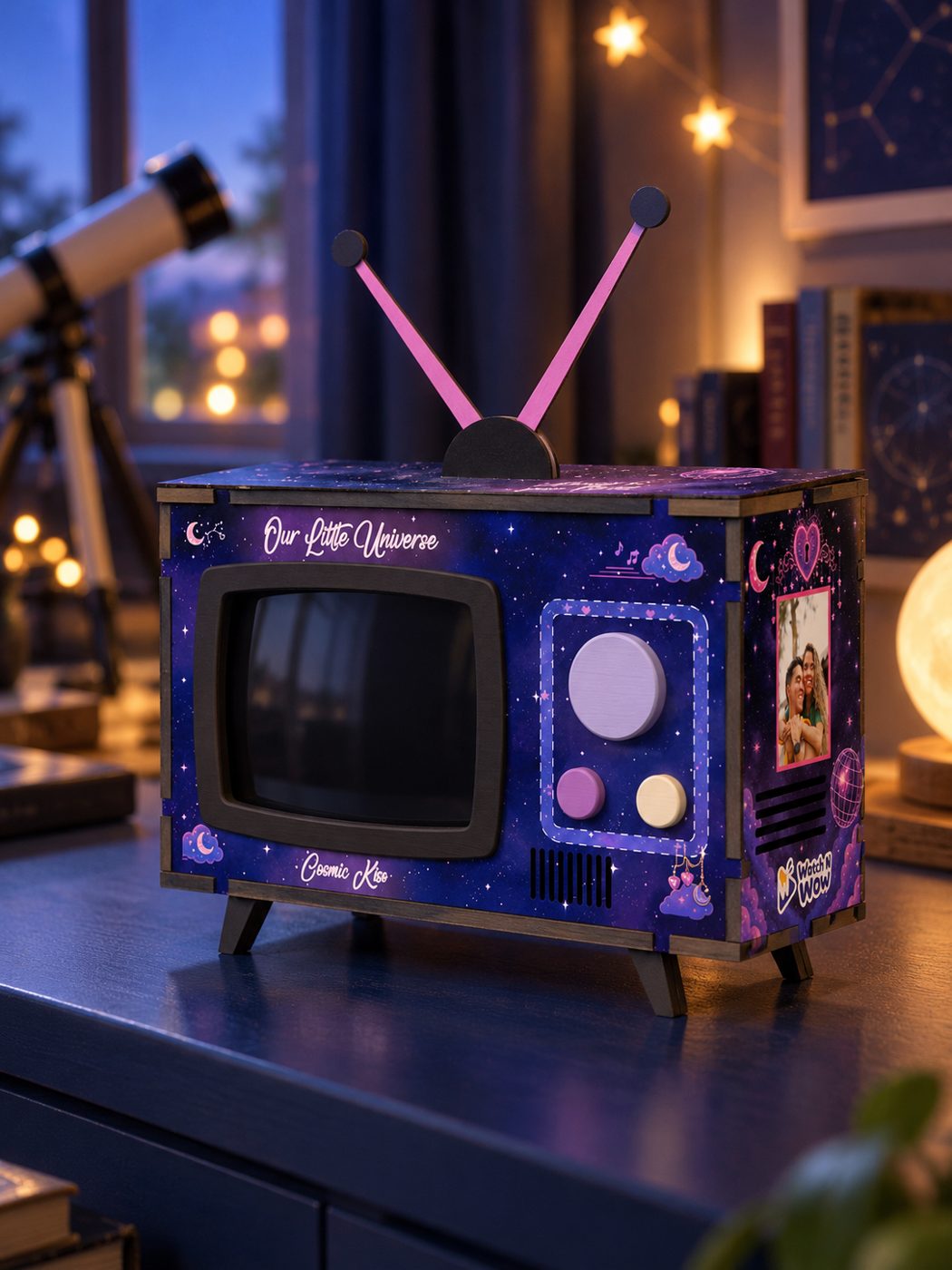
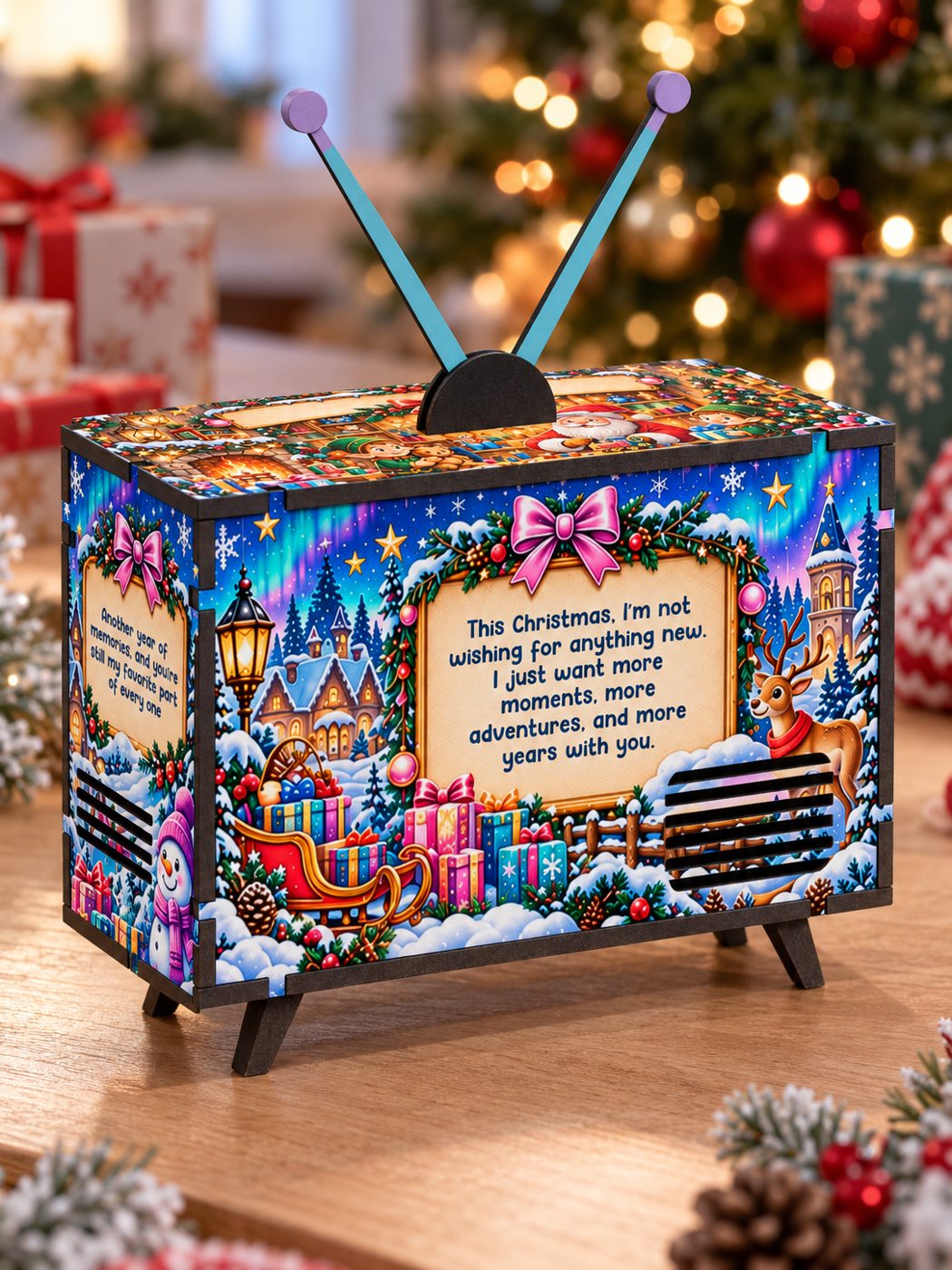
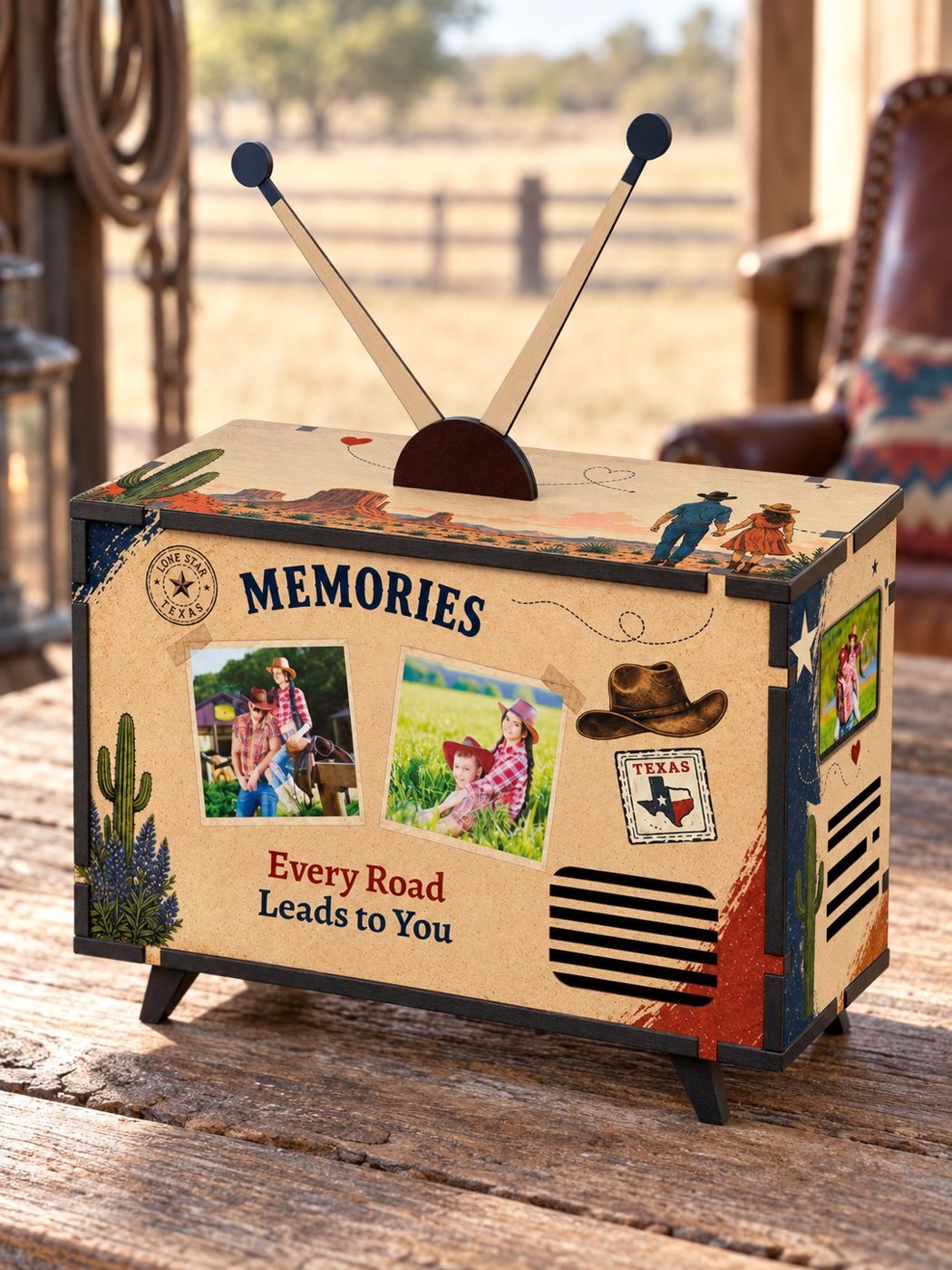
Ricky Flores is the founder of Watch N Wow and an electrical engineer with 15+ years of experience building consumer technology at Apple, Samsung, and Texas Instruments. In Dallas, Texas, he builds the Mini Memory TV by hand: a small retro TV that plays a video, a message and an original song made from your photos and your story. Read more at watchnwow.com.
Sources
- Sedikides, C., Wildschut, T., Arndt, J., & Routledge, C. (2008). “Nostalgia: Past, present, and future.” Current Directions in Psychological Science, 17(5), 304–307. https://doi.org/10.1111/j.1467-8721.2008.00595.x
- Wildschut, T., Sedikides, C., Arndt, J., & Routledge, C. (2006). “Nostalgia: Content, triggers, functions.” Journal of Personality and Social Psychology, 91(5), 975–993. https://doi.org/10.1037/0022-3514.91.5.975
- Routledge, C., Arndt, J., Wildschut, T., Sedikides, C., Hart, C. M., Juhl, J., Vingerhoets, A. J. J. M., & Schlotz, W. (2011). “The past makes the present meaningful: Nostalgia as an existential resource.” Journal of Personality and Social Psychology, 101(3), 638–652. https://doi.org/10.1037/a0024292
- Janata, P. (2009). “The neural architecture of music-evoked autobiographical memories.” Cerebral Cortex, 19(11), 2579–2594. https://doi.org/10.1093/cercor/bhp008
- Barrett, F. S., Grimm, K. J., Robins, R. W., Wildschut, T., Sedikides, C., & Janata, P. (2010). “Music-evoked nostalgia: Affect, memory, and personality.” Emotion, 10(3), 390–403. https://doi.org/10.1037/a0019006
- Henkel, L. A. (2014). “Point-and-shoot memories: The influence of taking photos on memory for a museum tour.” Psychological Science, 25(2), 396–402. https://doi.org/10.1177/0956797613504438
- Barasch, A., Diehl, K., Silverman, J., & Zauberman, G. (2017). “Photographic memory: The effects of volitional photo taking on memory for visual and auditory aspects of an experience.” Psychological Science, 28(8), 1056–1066. https://doi.org/10.1177/0956797617694868
- Belk, R. W. (1988). “Possessions and the extended self.” Journal of Consumer Research, 15(2), 139–168. https://doi.org/10.1086/209154
- Iyer, A., & Jetten, J. (2011). “What’s left behind: Identity continuity moderates the effect of nostalgia on well-being and life choices.” Journal of Personality and Social Psychology, 101(1), 94–108. https://doi.org/10.1037/a0022496
- Verplanken, B. (2012). “When bittersweet turns sour: Adverse effects of nostalgia on habitual worriers.” European Journal of Social Psychology, 42(3), 285–289. https://doi.org/10.1002/ejsp.1852
- Newman, D. B., Sachs, M. E., Stone, A. A., & Schwarz, N. (2020). “Nostalgia and well-being in daily life: An ecological validity perspective.” Journal of Personality and Social Psychology, 118(2), 325–347. https://doi.org/10.1037/pspp0000236