Table of Contents
Pet Adoption Anniversary Gift Ideas: A Then-and-Now Story
Pet adoption anniversary gift ideas that tell a then-and-now story: find the date, pair first-day photos with today's, and add a simple yearly ritual.
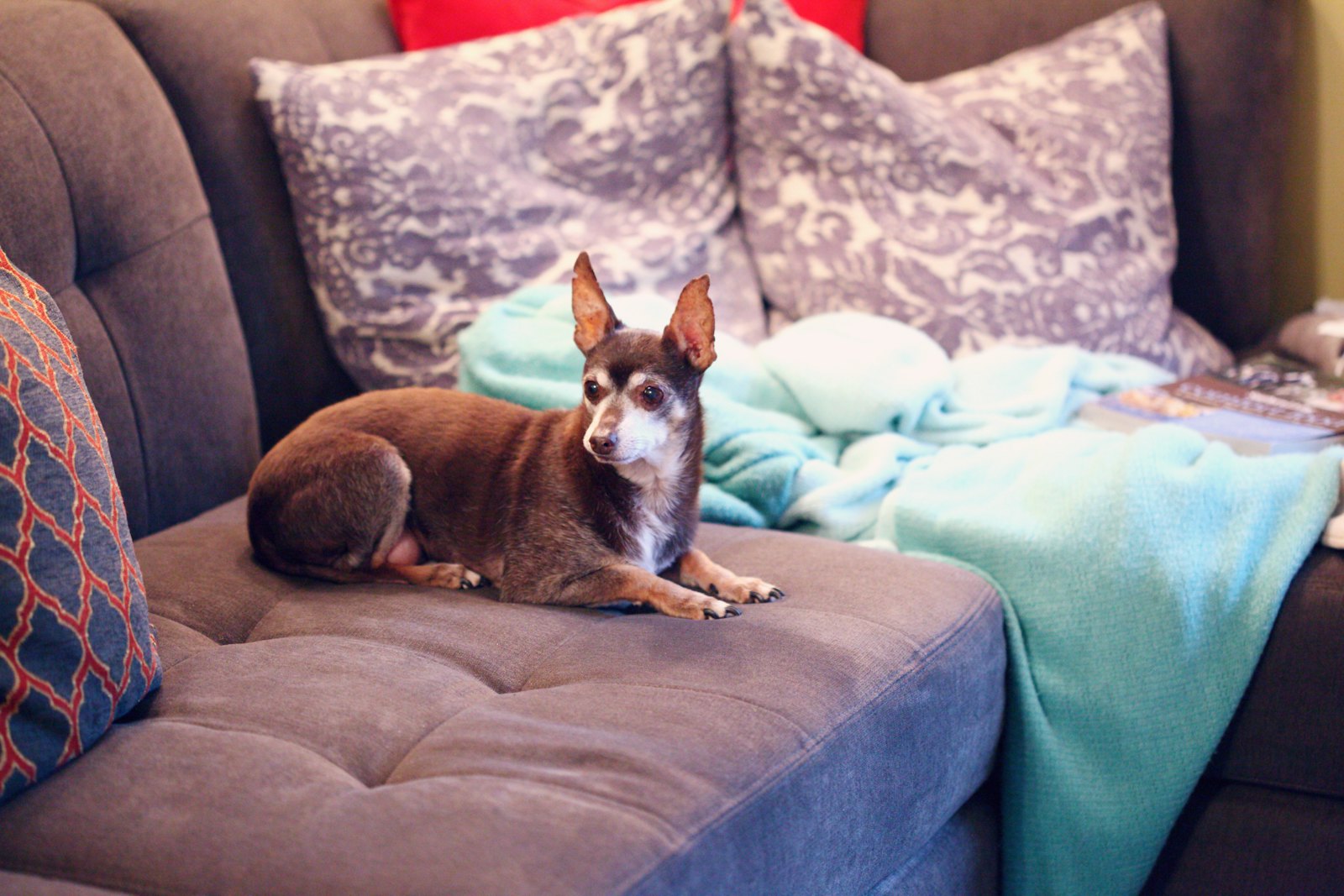
On the first night, she slept behind the couch and would not come out. Now she owns the left cushion, sighs loudly when anyone takes it, and meets you at the door with a sock in her mouth. If you have adopted a dog or a cat, you know the arc: the nervous animal in the shelter photo and the confident one who runs the house.
That arc is the best material for marking the day. The strongest pet adoption anniversary gift ideas are not toys or a cake from the pet store, though those are fine. They are a then-and-now story: photos from the first day next to photos from today, the habits that appeared one by one, and a small ritual you repeat every year. This guide walks through how to build one in an evening or over a weekend.
Key Takeaways
- About half of U.S. pet owners (51%) say their pet is as much a part of the family as a human member (Pew Research Center, 2023). Marking an adoption day is a normal family ritual, not an eccentric one.
- Pets can be a real source of social support that complements human relationships, according to three studies in the Journal of Personality and Social Psychology (McConnell et al., 2011).
- Rituals make experiences more enjoyable by increasing involvement (Vohs et al., 2013). A small yearly ritual will likely mean more than a bigger one-time gift.
- The best then-and-now photos match the place and the angle: the same doorway, the same couch, the same spot on the walk.
- Keep any treat pet-safe. The ASPCA lists chocolate, grapes and raisins, onions and garlic, and xylitol among foods to avoid.
Why adoption days are easy to miss and worth marking
Many pet owners celebrate a “gotcha day” or adoption anniversary instead of a birthday, often because a shelter animal’s real birthday is unknown. Searches and pet forums are full of the same questions: “What do you do for your dog’s gotcha day?” “Is it weird to celebrate my cat’s adoption anniversary?” “We adopted our dog three years ago and I want to do something more than a new toy.”
The difficulty is that the date slips by. It is not on any calendar, there is no card aisle for it, and the animal does not know. So people either forget or default to a treat and a social post.
There is a better reason to mark it than the pet’s enjoyment. An adoption anniversary is a story about change: a scared animal who learned to trust, a household that rearranged itself, a routine that formed. That story belongs to the people as much as to the pet, and it is easy to lose. The first-day photos are buried in a camera roll from years ago. Nobody wrote down the week she first jumped on the bed. A then-and-now story keeps it.
Some adoption stories also hold hard parts: a pet who came from neglect, a long recovery, a family loss around the time of adoption. You can tell the story gently and leave those details out, or include them as the “then” that makes the “now” meaningful. It is your call.
What the research says about pets, family and rituals
Pets are family for many households. A Pew Research Center survey of 5,073 U.S. adults found that 62% own a pet. Among pet owners, 97% said their pets are part of their family, and 51% said their pets are as much a part of the family as a human member. Among owners of dogs only, the figure was 53%; among cat-only owners, 48%. Marking an adoption day sits comfortably within how many people already think of their animals.
Pets provide real social support. Allen McConnell and colleagues ran three studies on pet ownership for the Journal of Personality and Social Psychology (2011). Pet owners reported better well-being than non-owners on several measures. Owners benefited more when their pets met their social needs, and support from pets complemented rather than replaced support from people. In a lab experiment, pets helped owners buffer the sting of social rejection. The comparisons between owners and non-owners are correlational, so they show association rather than proof that pets cause better well-being. They do suggest an adoption anniversary marks a relationship that matters.
Rituals increase enjoyment. Kathleen Vohs, Yajin Wang, Francesca Gino and Michael Norton found in four experiments in Psychological Science (2013) that performing a ritual before eating increased how much people enjoyed food and how flavorful and valuable they found it. Random gestures helped less than ritual ones, a short delay between ritual and consumption helped, and performing the ritual yourself mattered more than watching someone else do it. The authors concluded rituals work by increasing involvement. The studies involved chocolate, lemonade and carrots, not pets, so applying them to an anniversary is an inference. But it suggests the repeated walk to the same park, every year, is doing real work.
Pet-safe celebrations matter. The ASPCA Animal Poison Control Center’s list of people foods to avoid feeding pets includes chocolate, coffee and caffeine, grapes and raisins, onions, garlic and chives, macadamia nuts, xylitol, alcohol and yeast dough, and very salty foods. Xylitol, a sweetener found in some sugar-free products, can cause dangerously low blood sugar and liver damage in dogs. A “pup cake” made at home needs to skip all of these.
Ways to mark an adoption anniversary, compared
The table compares common ways to mark the day by time, cost and how long they last.
| Method | Best for | Time | Cost | Limits |
|---|---|---|---|---|
| New toy or treat | Every pet, every year | Minutes | Low | Fun for the pet, forgotten by the people |
| Then-and-now photo pair, printed | Any household with first-day photos | 1–2 hours | Low | Needs matching spots and angles to work |
| Short then-and-now video with a song | People who rewatch things | An evening or a weekend | Free to moderate | Easy to make too long; keep it under two minutes |
| Written “year in habits” list or letter | Families with kids; anyone sentimental | 30 minutes | Free | Needs to be kept somewhere it can be found |
| Yearly ritual (same walk, same park, same photo spot) | Everyone | An hour a year | Free | Requires remembering the date |
| Donation or volunteering at the shelter of origin | People who want to pay it forward | An afternoon | Varies | Check what the shelter actually needs |
Most households will get the most from combining two: a then-and-now photo pair and a yearly ritual. One captures the story; the other keeps adding to it.
How to build a then-and-now story, step by step
Step 1: Find the real date
Check your adoption paperwork, the shelter’s email receipt or the microchip registration. If you cannot find them, scroll your camera roll to the first photos of the pet; the date is stored in the photo’s details on most phones. Put the date in your calendar with a reminder a week ahead. Common mistake: guessing the date, then feeling unsure about it every year.
Step 2: Gather the “then” photos
Collect the shelter listing photo if you have it, the car ride home, the first night, the first week. Ask family members to send theirs; somebody always took a blurry one you have never seen. Save the original files rather than screenshots so they stay sharp if printed.
Step 3: Shoot the “now” photos in the same places
This is the step that makes then-and-now work. Stand where the first photo was taken, at the same height and angle, and take the same shot today. The same doorway, the same patch of kitchen floor, the same spot behind the couch where she hid. Side by side, the difference tells the story without words. Common mistake: pairing a first-day photo with a random current one, which loses the comparison.
Step 4: Write down the habits
List the small things that appeared over time: the favorite sofa cushion, the noise at dinnertime, the route he insists on for the evening walk, the way she greets one family member differently. Habits are what make a pet “yours,” and they are the first thing people forget once a pet is gone. Ten items is plenty. Kids can draw them.
Step 5: Put it in three beats
Shape the story simply: before (the shelter, the nervous first days), the turning point (the night she first slept on the bed, the first time he played), and now (the confident animal who runs the house). Three beats is enough for a printed card, a one-page letter or a short video. If you make a video, keep it under about two minutes and pick one song.
Step 6: Add a small yearly ritual
Choose something you will repeat every year on the date: the same walk, the same park, the same then-and-now photo spot, a homemade pet-safe treat. Vohs and colleagues found rituals increase enjoyment by increasing involvement, so the repetition is the point. Check any homemade treat against the ASPCA list before you bake it.
Step 7: Keep it somewhere you will find it
Print the photo pair, put the letter in a folder with the adoption papers, and save the video file somewhere other than your phone. Each year, add one new “now” photo. Over time the story grows into a timeline. (Why photos sitting in a camera roll rarely get looked at is the subject of our piece on rescuing your photos.)
How to make it personal
If you have 10 minutes
Find the first photo of your pet in your camera roll, then take the same shot today from the same spot. Put them side by side and send them to the family chat.
If you have a weekend
Gather the first-week photos from everyone, shoot matching “now” pictures, write the list of ten habits, and make a printed card or a short video in three beats. Take the walk you took on the first day.
If you want it to last years
Start a yearly ritual on the adoption date and add one new photo to the same series every year. Keep originals and the habit list with the adoption papers. A pet’s story is easiest to tell while it is still being lived. (For why looking back gives a keepsake its weight, see why nostalgia makes gifts feel bigger.)
The question to ask yourself: “If I lost these first-day photos tomorrow, what part of this animal’s story would nobody remember?”
Frequently asked questions
What do you do for a pet’s adoption anniversary?
Mark it with a then-and-now story and a small ritual: put a first-day photo next to one taken today in the same spot, write down the habits your pet developed, and repeat a simple tradition each year, like the same walk or a pet-safe homemade treat. Research by Vohs and colleagues (2013) found rituals make experiences more enjoyable.
What is a gotcha day?
A gotcha day is the anniversary of the day a pet was adopted. Many owners celebrate it instead of a birthday, especially when a rescue animal’s real birth date is unknown. It is an informal tradition rather than an official holiday.
What are good pet adoption anniversary gift ideas?
A printed then-and-now photo pair, a short video telling the pet’s story in three beats, a written list of their habits, a new toy or safe treat, or a donation to the shelter they came from. The most lasting ideas capture the pet’s story rather than adding another object.
Is it safe to make a cake for my dog’s gotcha day?
It can be, if you avoid ingredients the ASPCA lists as dangerous: chocolate, grapes and raisins, onions and garlic, macadamia nuts, xylitol, alcohol and very salty foods. Plain ingredients in small portions are safest. Ask your veterinarian if your dog has dietary restrictions.
Should I celebrate my pet’s adoption day or birthday?
Either, or both. Many owners choose the adoption day because it marks the start of the relationship and the date is known. Pew Research Center found 97% of U.S. pet owners consider their pets part of the family, so marking either date is common.
If you would rather have the then-and-now photos, a short story and an original song about your pet built into a video and loaded onto a small retro TV, that is what we make at Watch N Wow.
About the author
Ricky Flores is the founder of Watch N Wow and an electrical engineer with 15+ years of experience building consumer technology at Apple, Samsung, and Texas Instruments. In Dallas, Texas, he builds the Mini Memory TV by hand: a small retro TV that plays a video, a message and an original song made from your photos and your story. Read more at watchnwow.com.
Sources
- Pew Research Center (2023). “About half of U.S. pet owners say their pets are as much a part of their family as a human member.” https://www.pewresearch.org/social-trends/2023/07/07/about-half-us-of-pet-owners-say-their-pets-are-as-much-a-part-of-their-family-as-a-human-member/
- McConnell, A. R., Brown, C. M., Shoda, T. M., Stayton, L. E., & Martin, C. E. (2011). “Friends with benefits: On the positive consequences of pet ownership.” Journal of Personality and Social Psychology, 101(6), 1239–1252. https://doi.org/10.1037/a0024506
- Vohs, K. D., Wang, Y., Gino, F., & Norton, M. I. (2013). “Rituals enhance consumption.” Psychological Science, 24(9), 1714–1721. https://doi.org/10.1177/0956797613478949
- ASPCA Animal Poison Control Center. “People Foods to Avoid Feeding Your Pets.” https://www.aspca.org/pet-care/animal-poison-control/people-foods-avoid-feeding-your-pets