Table of Contents
Bilingual Family Gift Ideas That Include Everyone
Bilingual family gift ideas that honor a heritage language without leaving out relatives who don't speak it: what research says and how to choose the words.
At Abuela’s 80th birthday, the grandkids planned a slideshow. The captions were in English, because that’s how they text. Halfway through, she leaned over and asked her daughter what the words said. At the same party, a cousin who grew up in Dallas sat silently through the Spanish toast, smiling at the parts where everyone laughed.
Good bilingual family gift ideas solve both of those moments. The rule of thumb is simple: let the recipient’s language lead, keep the words that carry feeling in the language they were first said in, and add a readable translation so nobody in the room is left out. In many families the heritage language means the most to the oldest relatives and is spoken least by the youngest, and research shows both groups feel it.
Key Takeaways
- Almost 1 in 5 US residents (67.8 million people) spoke a language other than English at home, according to Census Bureau data; Spanish accounted for 62% of them.
- Language often fades across generations: among third-or-higher-generation US Latinos, 65% said they can’t carry on a conversation well in Spanish (Pew Research Center, 2023), and a Southern California study projected heritage-language loss by the third generation (Rumbaut, Massey & Bean, 2006).
- Language can be tender ground: 54% of Hispanics who speak little or no Spanish said another Hispanic person had made them feel bad for it (Pew, 2023).
- Teens who shared a language with their parents reported more cohesion and discussion; those who used different languages reported less (Tseng & Fuligni, 2000).
- First-language phrases can carry more emotional charge: bilinguals showed stronger physical reactions to childhood reprimands in their first language (Harris et al., 2003). Keep the family’s own phrases, and translate around them.
The language problem inside many family gifts
Families that live in more than one language know this situation. “My grandma only reads Spanish but the grandkids want to write the card.” “We’re making a wedding video for a Korean-American couple and half the guests won’t understand the parents’ speech.” “My husband’s family speaks Tagalog; I don’t. How do I write something for his mom that isn’t just Google Translate?” “My kids understand Spanish but are embarrassed to write it.”
Two quiet mistakes show up again and again. The first is defaulting to the language of the person making the gift, which is often English for younger relatives, and leaving the recipient to have it explained. The second is the opposite: making the gift entirely in the heritage language as a gesture of respect, without noticing that some of the people giving it, or the recipient’s partner, or the grandkids, can’t read it. Both are well-meant. Both leave someone outside.
There’s also an emotional layer. A grandchild who writes broken Spanish may worry about being corrected. A grandparent may feel a twinge seeing her language disappear from the family’s everyday life. A gift is a rare moment when the family’s languages sit side by side on purpose, and it can either honor that or expose the gaps.
What the research says about language in families
Many US households live in more than one language
The Census Bureau’s report on language use, based on American Community Survey data, found that the number of people speaking a language other than English at home nearly tripled from 23.1 million in 1980 to 67.8 million, almost 1 in 5 residents. Spanish was the most common, at 62% of non-English speakers at home, and more than half of Spanish speakers were US-born. A bilingual family is not an edge case; it is a large share of the people giving gifts.
Heritage languages fade quickly across generations
Rubén Rumbaut, Douglas Massey and Frank Bean used two large Southern California surveys to calculate “linguistic life expectancies,” published in Population and Development Review in 2006. They measured whether people preferred speaking their mother tongue at home and whether they spoke it very well. Spanish survived longer among Mexican-origin families than other immigrant languages did, but the authors concluded that its ultimate demise nonetheless seems assured by the third generation. The analysis assumes today’s patterns predict the future, which continued immigration and Spanish-language media could change.
Pew Research Center’s 2023 survey of 3,029 Latino adults shows the same slope from a different angle. Overall, 75% of US Latinos said they could carry on a conversation in Spanish pretty well or very well, but 65% of third-or-higher-generation Latinos said they could not. In a single family, that can mean a fluent grandmother, bilingual parents and grandchildren who mostly understand but rarely speak.
Language can be a source of pride and of shame
The same Pew survey found that 78% of US Hispanics said it is not necessary to speak Spanish to be considered Hispanic, yet 54% of those who speak little or no Spanish said another Hispanic person had made them feel bad for it. Four in ten Hispanic adults said they hear jokes often or extremely often about Hispanics who don’t speak Spanish well. And 63% said they speak Spanglish, a mix of Spanish and English, at least sometimes.
For a gift, this means two things. Don’t make language a test the givers can fail. And don’t treat mixed language as a mistake; for many families it is simply how they talk.
Shared language goes with closeness
Vivian Tseng and Andrew Fuligni surveyed more than 620 adolescents from East Asian, Filipino and Latin American immigrant families, published in the Journal of Marriage and Family in 2000. Teens who spoke different languages with their parents reported less cohesion and discussion than peers who shared a language with them, and those who communicated mutually in the native language reported the highest levels. Over two years, relationship quality predicted later language use more than language predicted relationships, so this is an association, not proof that speaking the language makes families closer. Still, it suggests that a family’s shared language is tied up with feeling close.
A first language can hit harder emotionally
Catherine Harris, Ayşe Ayçiçeği and Jean Berko Gleason measured skin conductance in 32 Turkish-English bilinguals as they rated words and phrases in each language, published in Applied Psycholinguistics (2003). Taboo words and childhood reprimands (“Shame on you!”) produced greater physical arousal in their first language than in their second. It’s a small study about reprimands, not about love notes, but it supports a common experience: some phrases only feel real in the language you first heard them in. “Mija,” “te quiero mucho,” “Dios te bendiga” may carry weight that no translation will.
Language options for a bilingual family gift
This decision matrix compares the main ways to handle language in a family gift, with what each does well and where it can go wrong.
| Approach | Works well when | Risk | Basis |
|---|---|---|---|
| All in the recipient’s language | Recipient reads only that language; givers can write it or get help | Givers who can’t write it feel left out or fake | Pew 2023 (language shaming) |
| All in English | Everyone, including the recipient, prefers English | Erases the family’s other language; elders may not follow | Rumbaut et al. 2006 (language loss) |
| Recipient’s language first, translation underneath | Mixed audience; recipient is the elder | Takes more space; translation needs a human check | Common practice; Tseng & Fuligni 2000 |
| Key phrases kept in the original, rest in the shared language | The family mixes languages naturally | Can feel token if only one phrase is included | Harris et al. 2003; Pew 2023 (Spanglish) |
| Each person writes in their own language | Many contributors of different generations | Recipient may not read every message; add translations | Common practice |
| Spoken rather than written (voice or video) | Elders who don’t read easily; kids who speak better than they write | Needs subtitles for anyone who doesn’t understand | Common practice |
There’s no single right row. The one to avoid is choosing without asking whose language this gift is for.
What to actually do
Start with the recipient’s language, not yours
Ask: what language does the recipient read and feel in? For many grandparents that’s the heritage language; for a teenager it may be English. Let that lead. If the recipient is bilingual, ask which language they’d want; some people prefer their childhood language for something sentimental.
Keep the family’s own phrases untranslated
Every family has its words: the nickname, the blessing at the door, the joke only the cousins get. Keep those in the original, even in an otherwise English gift. Harris and colleagues’ findings suggest first-language phrases can carry more emotional charge, and those phrases are often what the recipient will remember.
Add a readable translation, quietly
Put a translation underneath or alongside, in a smaller size, so a partner, an in-law or a grandchild can follow. In a video, use subtitles. This includes everyone without making anyone ask. Have a person who speaks the language check any machine translation, especially for terms of endearment and religious phrases, which tools often flatten.
Let each giver write in the language they’re comfortable in
For a group gift, invite each person to write in whatever language feels natural, and help with translations afterward. A grandchild’s simple Spanish (“Te quiero, abuela. Gracias por los tamales.”) can mean more than a perfect paragraph written by someone else. Given Pew’s finding that over half of non-Spanish-speaking Hispanics have been made to feel bad about it, make it explicit that imperfect is welcome.
Use voice when writing is a barrier
Some elders read little; some kids speak a heritage language better than they write it. A short recording or video lets everyone use the language they actually speak, with subtitles added for the rest. A spoken “te quiero” in a grandchild’s voice is hard to translate and easy to replay.
What not to do
Don’t correct a giver’s grammar in a family gift unless they ask. Don’t add a single token phrase in the heritage language to an otherwise unrelated gift and call it bilingual. And don’t assume an older relative wants everything in the heritage language; ask, because some prefer English, especially if they’ve lived most of their life in it.
How to make it personal
If you have 10 minutes
Write down three words or phrases your family says that don’t translate well: a nickname, a blessing, a saying. Ask one relative what each one means to them. Those are the words that belong in the gift.
If you have a weekend
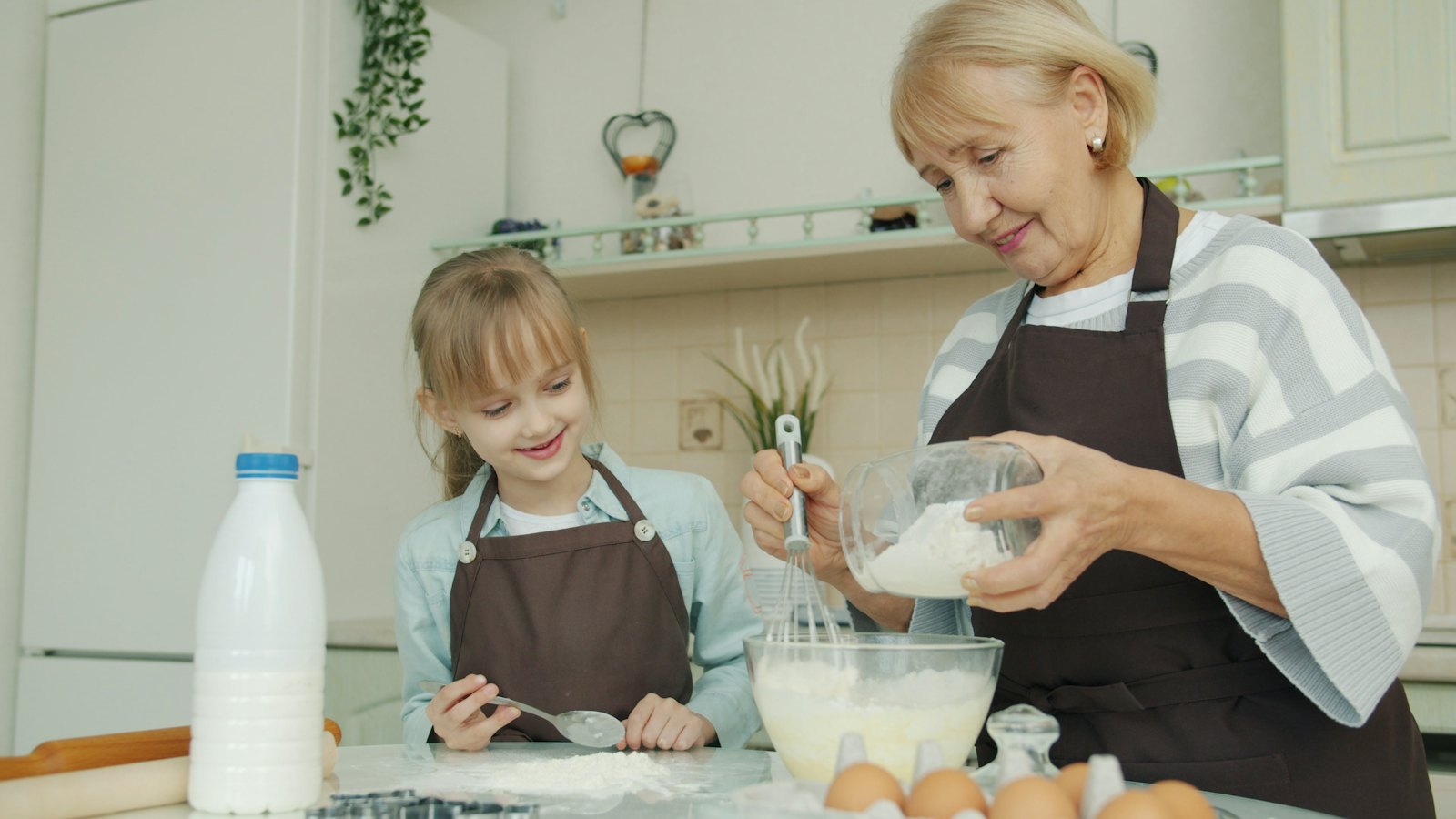
Gather short messages from each generation, each in their own language. Translate them side by side with help from a fluent relative, not just an app. If some people would rather speak than write, record a short voice note from each and add subtitles. For more on why the giver’s own voice matters, read what “personalized” should mean.
If you want it to last years
Give the gift a form where both languages can live together for the long run: a printed page with both versions, a video with subtitles, a recipe card in the original handwriting with a typed translation. Keepsakes that hold a family’s language can gain meaning as the language fades from daily life, which is part of why nostalgia makes a gift feel bigger. If you’re writing for a parent, our guide on what to write in a gift for mom has prompts that work in any language.
The question to ask yourself: “Can the person receiving this, and every person giving it, understand every word?”
Frequently asked questions
Should a gift for my grandparents be in English or their native language?
Let their language lead. If they read and feel most at home in the heritage language, use it, and add a translation underneath so younger relatives and in-laws can follow. If you’re unsure, ask a parent or ask them directly; some elders prefer English after decades in the US.
How do I write a message in a language I don’t speak well?
Write a short, simple message, even two lines, and ask a fluent relative to check it. Imperfect is fine; the effort reads as love. Avoid relying only on machine translation for endearments and blessings, which often lose their tone.
What are good bilingual family gift ideas?
A photo book or frame with captions in both languages, a recipe written in the original handwriting with a translation, a video with voice messages from each generation and subtitles, or a family tree labeled with the names and nicknames each side uses. The key is that both languages appear on purpose.
Is it okay to mix Spanish and English in a family gift?
Yes, if that’s how your family talks. Pew Research Center found that 63% of US Hispanics speak Spanglish at least sometimes. Mixing languages naturally can feel more like home than a formal version in either one.
How do I include relatives who don’t speak the family language?
Add translations or subtitles beside every message, so no one has to ask what it says. In group gifts, let each person write in their own language and translate them all, which keeps the gift inclusive without asking anyone to perform.
About the author
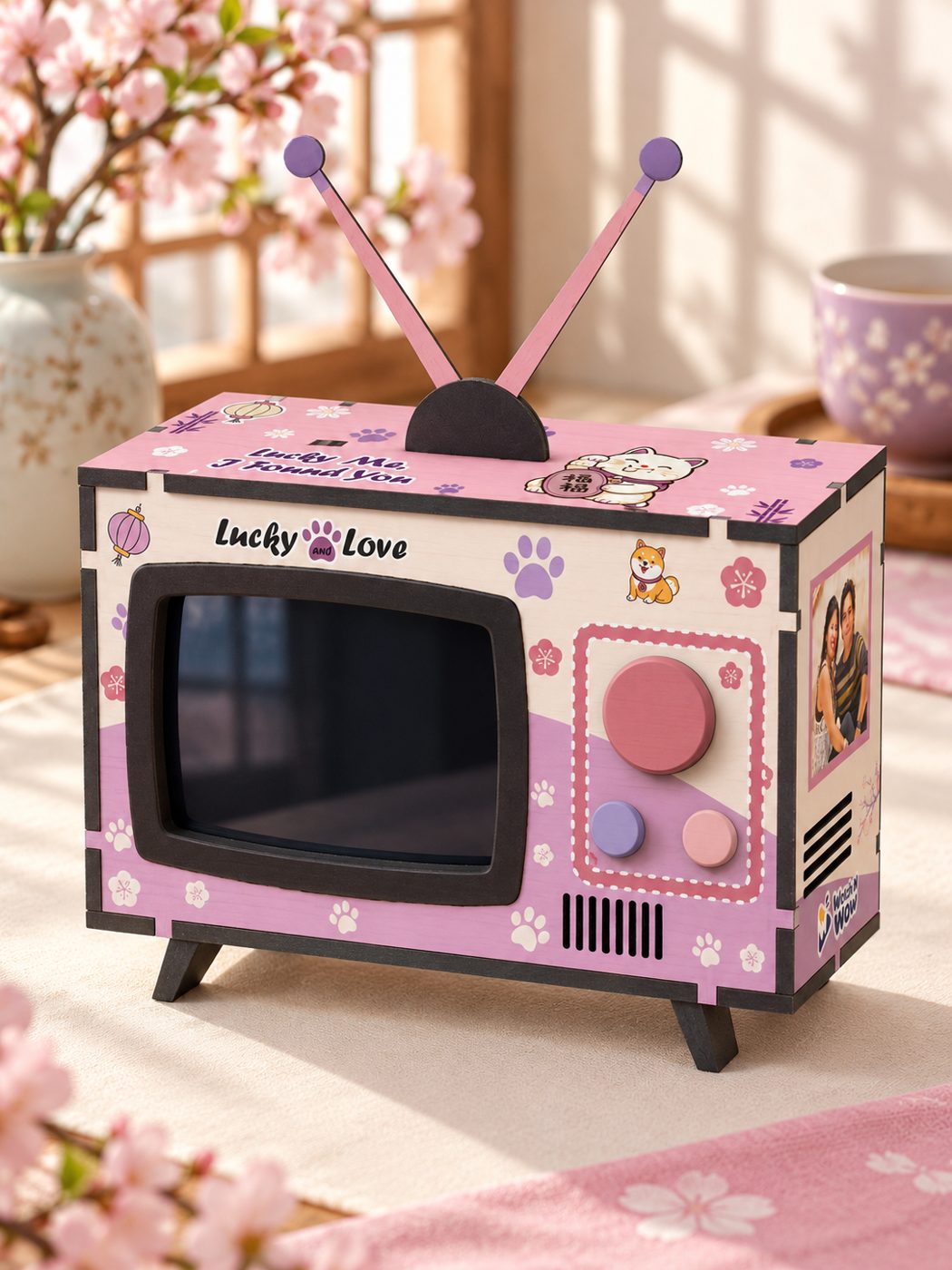
Ricky Flores is the founder of Watch N Wow and an electrical engineer with 15+ years of experience building consumer technology at Apple, Samsung, and Texas Instruments. In Dallas, Texas, he builds the Mini Memory TV by hand: a small retro TV that plays a video, a message and an original song made from your photos and your story. Read more at watchnwow.com.
Sources
- Dietrich, S., & Hernandez, E. (2022). “What languages do we speak in the United States?” U.S. Census Bureau, America Counts. https://www.census.gov/library/stories/2022/12/languages-we-speak-in-united-states.html
- Mora, L., & Lopez, M. H. (2023). “Latinos’ views of and experiences with the Spanish language.” Pew Research Center. https://www.pewresearch.org/race-and-ethnicity/2023/09/20/latinos-views-of-and-experiences-with-the-spanish-language/
- Rumbaut, R. G., Massey, D. S., & Bean, F. D. (2006). “Linguistic life expectancies: Immigrant language retention in Southern California.” Population and Development Review, 32(3), 447–460. https://doi.org/10.1111/j.1728-4457.2006.00132.x
- Tseng, V., & Fuligni, A. J. (2000). “Parent-adolescent language use and relationships among immigrant families with East Asian, Filipino, and Latin American backgrounds.” Journal of Marriage and Family, 62(2), 465–476. https://doi.org/10.1111/j.1741-3737.2000.00465.x
- Harris, C. L., Ayçiçeği, A., & Gleason, J. B. (2003). “Taboo words and reprimands elicit greater autonomic reactivity in a first language than in a second language.” Applied Psycholinguistics, 24(4), 561–579. https://doi.org/10.1017/S0142716403000286