Table of Contents
Why a Thoughtful Gift Goes Unnoticed (and What Registers)
Receivers can't see the effort behind a thoughtful gift. Six studies on what actually registers: fit, ease of use, and a piece of the giver inside the gift.
Three weeks. That’s what your sister’s birthday present cost you: a cousin group chat, two returned orders, and a Saturday spent driving across town because the one in the photo was the wrong green. She opened it, said “oh, this is nice,” and set it beside the candle her coworker grabbed on the way over. Same shelf. Same “nice.”
Here’s the thing nobody tells you: from the receiver’s side of the wrapping paper, a thoughtful gift and a last-minute one look the same. The research on why is specific, a little humbling, and far more useful than another list of ideas.
Key Takeaways
- Receivers don’t automatically notice how much thought went into a gift. In Zhang and Epley’s 2012 experiments, thoughtfulness raised appreciation only when the gift missed, and only when it came from a friend.
- Gifts people explicitly asked for were rated as more thoughtful and considerate than surprises, not less (Gino and Flynn, 2011). Asking is not cheating.
- Price doesn’t buy appreciation. Givers expect a pricier gift to be loved more; receivers’ appreciation didn’t track the price tag (Flynn and Adams, 2009).
- Receivers care far more than givers about whether a gift is easy to use (Baskin et al., 2014), and they like gifts that carry a piece of who the giver is (Paolacci et al., 2015).
- The thought becomes visible only through specificity: a detail only you would know, in a form they can use, with something of you in it.
Why the receiver rarely notices how much thought went in
Read the gift threads on Reddit for an hour and the same sentences come up in different fonts. “My mom says she doesn’t want anything.” “My husband is impossible to shop for.” “I put so much thought into it and she barely reacted.” “Is it lazy to buy what’s on the list?” And the quiet one, usually posted at 1 a.m. in December: “I don’t know why I bother.”
Notice what those sentences have in common. They’re all about the giver’s experience. The hours, the research, the near misses. That’s natural, because the hours are the only part of the gift you were present for. You lived the three weeks. Your sister got a box.
That’s not a character flaw on her side, either. The people who study gift giving psychology for a living keep finding the same gap: the giver and the receiver are grading two different things. The giver is grading the search. The receiver is grading the object, and then grading it again every time they walk past it for the next year.
So the question of what makes a gift meaningful has a less romantic answer than the greeting cards suggest. Meaning doesn’t travel on its own. It has to be carried by something the receiver can see, hold, use or replay. A thoughtful gift whose thought stays in your head is, to them, a gift.
The six studies below are the ones that tested this with real registries, real exchanges and real money. What they found is more encouraging than it first sounds, because it tells you where to put the effort so it lands.
What the research actually says
Thoughtfulness counts mostly when the gift misses. In a 2012 paper in the Journal of Experimental Psychology: General, Yan Zhang and Nicholas Epley set out to test the phrase “it’s the thought that counts.” Their reasoning: considering another person’s thoughts takes effort, so receivers should only do it when something prompts them, such as a friend handing over a gift that misses. Across three experiments, that is what they found. Receivers of good gifts appreciated the gift; how much thought went into it barely moved the needle. Receivers of bad gifts from someone they cared about did give credit for thoughtfulness. And givers, who never feel that prompt, mispredicted the whole pattern: they expected their thought to be noticed regardless. A fourth experiment showed who the thought does work for: the giver, who feels closer to the receiver after putting it in. The Chicago Booth Review summarised the authors’ advice bluntly: prioritise gifts the receiver will like over gifts that show off your thoughtfulness. One limit worth stating: these were controlled experiments, not a survey of real birthdays, and the “bad gift” scenarios were built to be bad.
Requested gifts read as more thoughtful, not less. Francesca Gino and Francis Flynn published five studies in the Journal of Experimental Social Psychology in 2011 under the title “Give them what they want.” They looked at wedding-registry gifts, ran a real exchange using Amazon wish lists with gifts in the $20 to $30 range, and compared specific suggestions against general lists. Receivers appreciated requested gifts more than unrequested ones, and rated them as more thoughtful and considerate. Givers predicted the opposite: they believed going off-list would read as more thoughtful. A fifth study found that receivers preferred money over the item they had asked for, while givers assumed cash would be the least welcome option of all. Stanford’s write-up of the work quotes Flynn: “Don’t try to mind read.” The participants were North American adults, in a culture where wish lists are normal; whether this holds in families where asking is taboo hasn’t been tested the same way.
Price doesn’t buy appreciation. Two years earlier, Flynn and Gabrielle Adams had published “Money can’t buy love” in the same journal. The asymmetry in the title is the finding: givers expected appreciation to rise with the price they paid, and receivers’ appreciation didn’t track price. Spending more makes the giver feel more generous. It doesn’t reliably make the receiver feel more loved.
Receivers want the version that’s easy to use. Ernest Baskin, Cheryl Wakslak, Yaacov Trope and Nathan Novemsky, writing in the Journal of Consumer Research in 2014, split gifts into two qualities: desirability (how attractive the thing is) and feasibility (how easy it is to use). Givers weighted desirability. Receivers weighted feasibility, and did so regardless of how close the giver was to them. The explanation is distance. The giver imagines the gift abstractly, from outside, so its appeal dominates; the receiver lives with it concretely, so the hassle dominates. The abstract puts the consequence plainly: givers “do not choose gifts that maximize receiver happiness or other relationship goals even though givers believe they are doing so.” Picture the trade-off as a voucher for the spectacular restaurant an hour away versus the very good one ten minutes from their house. Givers pick spectacular. Receivers would rather eat.
Gifts that carry the giver are liked more. Gabriele Paolacci, Laura Straeter and Ilona de Hooge turned the usual question around in the Journal of Consumer Psychology in 2015. Instead of asking whether a gift matched the receiver, they asked whether it matched the giver. Across four studies, receivers were especially appreciative of gifts that “figuratively match the giver,” meaning gifts that contain references to the giver’s own characteristics, because those gifts felt congruent with who the giver is. The effect didn’t depend on the receiver guessing at motives, and it didn’t depend on the two people having a good relationship. It did depend on the match being to a core characteristic of the giver rather than a peripheral one. If you are the person in the family who cooks, a thing you cooked carries you. A gift card from the cook carries nothing.
The frame that ties it together. In 2016, Jeff Galak, Julian Givi and Elanor Williams proposed in Current Directions in Psychological Science that most of these giver-receiver gaps come from one difference in attention: givers judge a gift by the moment of exchange, receivers by how valuable it will be once owned. Surprise, price, uniqueness and the big reveal all optimise the moment. Fit, ease of use and durability optimise the years after. In Carnegie Mellon’s summary of the paper, Galak notes the giver “wants to ‘wow’ the recipient,” while “the recipient is more interested in a gift that provides value over time.” The paper is a review rather than a new experiment, but it explains why every study above points the same way.
Common beliefs about a thoughtful gift versus what the studies found
Here is the pattern in one table, matched to the study that tested it.
| Common belief | What the research shows | Source |
|---|---|---|
| ”It’s the thought that counts.” | Thought counts mainly when the gift misses and comes from someone close. A good gift is appreciated for being good. | Zhang & Epley, 2012 |
| ”Buying from their list is lazy.” | Requested gifts were rated more thoughtful and considerate than surprises. | Gino & Flynn, 2011 |
| ”Spending more shows I care more.” | Givers expected appreciation to rise with price; receivers’ appreciation didn’t. | Flynn & Adams, 2009 |
| ”Go for the impressive option.” | Receivers weight ease of use more than givers do, whoever the giver is. | Baskin et al., 2014 |
| ”A good gift is entirely about them.” | Gifts that carry the giver’s core characteristics are liked more. | Paolacci et al., 2015 |
| ”Their reaction tells you if it worked.” | Givers grade the moment of exchange; receivers grade ownership over time. | Galak, Givi & Williams, 2016 |
Read down the middle column and a definition falls out. A thoughtful gift, from the receiver’s side, is one that fits them specifically, that they can use without friction, and that carries a recognisable piece of you. The hours you spent are not on the list. They can only get onto it by showing up inside the object.
What to actually do
Ask, and treat the answer as the gift
The simplest fix is the one givers resist most. Gino and Flynn’s receivers rated requested gifts as more thoughtful, so asking “what would you use this year?” is not a surrender; it’s data. Their fourth study adds a detail worth passing to the people who shop for you: givers responded better to one specific suggestion than to a general list. So when your mom says “I don’t need anything,” don’t take it as the final answer. Ask a narrower question. “The last thing you bought yourself and loved?” “What broke this year that you never replaced?” One specific answer beats twenty guesses.
Make the thought visible inside the gift
Zhang and Epley found that thought counts when the receiver is prompted to consider it. The lesson most people draw is “thought doesn’t matter.” The better lesson is that the prompt has to be in the gift. A photo from the specific afternoon, not a generic frame. The date you met, in the engraving. A line only you could write, because you were there. That is what personalized should actually mean: not a name on a mug, but evidence that this was made for one person. To be clear, this is an inference from the research, not a tested recipe. What has been tested is that unnoticed thought earns no credit.
Choose the version they’ll use
Before you buy the impressive option, run Baskin’s feasibility check. Does it need a charger, an app, an account, a login they’ll forget? Does it need a wall they don’t have, a drive they won’t make, a decision they’ll put off? The receiver will meet every one of those frictions, and each one subtracts from the gift. A personalized gift that sits on a shelf and does its one thing beats a pricier one that needs a weekend of setup.
Put a piece of yourself in it
Paolacci’s finding is the most freeing one here. The receiver likes gifts that carry your core characteristics. If you are the cook, cook. If you are the one who keeps every photo, make the photo thing. If you are the engineer, build it. Note the word core: this is about who you are to them, not your favourite colour or team. It is also a large part of why the handmade effect exists. A thing someone made carries that person in a way a bought thing can’t.
Spend on fit, not on the number
Flynn and Adams give you permission to stop using price as a proxy for love. Put the budget where it changes fit: the right size, the right song, the right photo printed properly, the thing they asked for in the colour they asked for. The extra fifty dollars for a bigger version of the wrong thing is fifty dollars the receiver can’t see.
What not to do
Don’t chase surprise for its own sake. Galak, Givi and Williams put the big reveal squarely in the “great to give, not to get” column, and what gift science gets wrong about “wow” covers the cost of that trade in detail. Don’t give a gift that needs the receiver to do homework (assembly, sign-ups, choosing options) before it becomes a gift. And be careful with donations in someone’s name: the same review notes they feel generous at the moment of exchange and provide almost nothing to the receiver afterwards. Give to the cause, and give the person a gift.
How to make it personal
If you have 10 minutes
Write down one memory in three sentences, with the place and the year in it. Not “you were always there for me.” The afternoon the car died outside Waco and you both ate gas-station tacos on the hood. That paragraph is already a gift, and it’s the seed of everything below. Or send the narrow question, “what’s one thing you’d use this year?”, and accept the answer as given.
If you have a weekend
Go through the family group chat and pull ten to fifteen photos of them, not of events. Ask two relatives for one story each about the person; you’ll get three. Record a sixty-second voice note saying your three sentences out loud. Print the photos. Put the sentences on a card in your own handwriting. All of this is shoebox-and-pen work, and all of it passes the test in the table: specific to them, easy to use, unmistakably from you.
If you want it to last years
A keepsake survives on four things. It has a physical form, because a file in a cloud folder doesn’t get walked past. It has their name or their face in it, so it can’t be re-gifted or mistaken for décor. It has one moment attached to it, which is what makes them tell the story to a visitor. And it has something they’ll replay: a song, a recording, a video, a letter they reread. Decide where in their house it will live before you make it. That’s the whole recipe for a thoughtful gift that survives: it fits, it works, and it is visibly from you.
The question to ask yourself: “If they could see the three weeks I spent on this, what would they see, and is any of it visible in the thing itself?”
Frequently asked questions
Is it rude to ask someone what they want for a gift?
The evidence says no. In Gino and Flynn’s 2011 studies, receivers rated gifts they had asked for as more thoughtful and considerate than surprises. The polite version is a narrow question rather than “what do you want”: “What’s one thing you’d use this year?” or “What broke that you never replaced?” You get a usable answer, and they get something they’ll keep.
Is a gift from a wish list or registry less thoughtful?
Not to the person who wrote the list. Across wedding registries and a real Amazon wish-list exchange, Gino and Flynn found that requested gifts were appreciated more and seen as more considerate. Givers assumed the opposite. If you want to add thought, add it on top of the requested item (a note, a photo, the right colour), not instead of it.
Why doesn’t my family appreciate the gifts I put so much thought into?
Because they can’t see the thought. Zhang and Epley’s 2012 experiments found receivers only credit thoughtfulness when something prompts them to consider it, usually a gift that misses. A good gift gets appreciated for being good. Put the evidence of thought inside the gift: a specific date, a specific photo, a line only you could write.
Does the price of a gift matter to the person receiving it?
Much less than it matters to the person buying it. Flynn and Adams (2009) found givers expected appreciation to rise with what they spent, while receivers’ appreciation didn’t track price. Spend where it changes fit: the right size, the right version, the thing they named. The extra money on a grander version of the wrong thing is invisible.
What actually makes a gift feel personal?
Three things the research can point to. It fits them specifically, with a detail only you would know. It’s easy to use, because receivers weight feasibility far more than givers do (Baskin et al., 2014). And it carries a piece of you: gifts that match the giver’s core characteristics are liked more (Paolacci et al., 2015). A name on a mug clears none of those bars.
Is cash a bad gift?
Receivers don’t think so. In Gino and Flynn’s fifth study, people preferred money to the very item they had asked for, while givers assumed cash would be the least welcome option. The giver’s discomfort comes from the moment of exchange, where cash produces no scene. If you give it, add the part only you can give: a note with one specific memory, in your handwriting.
About the author
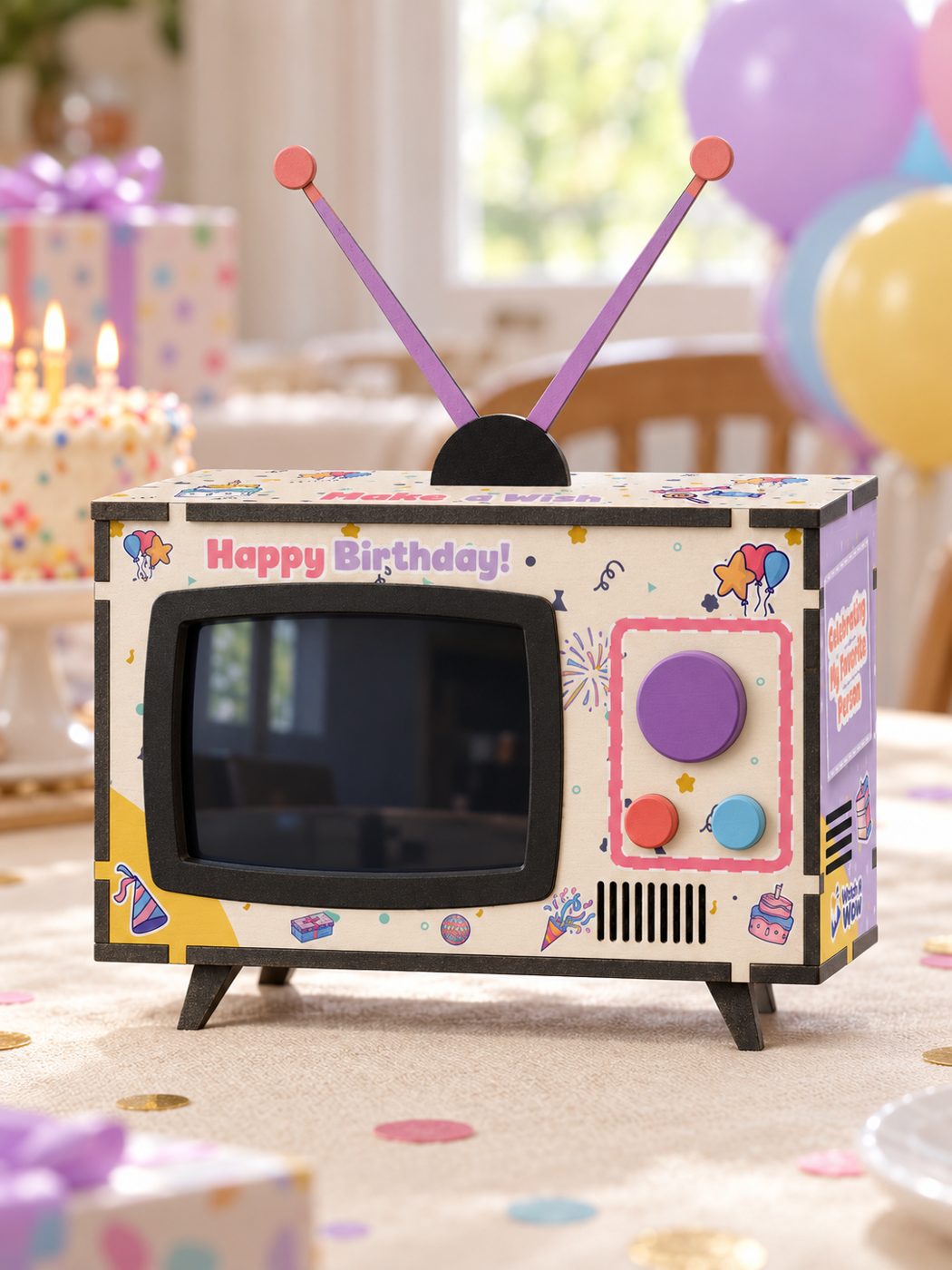
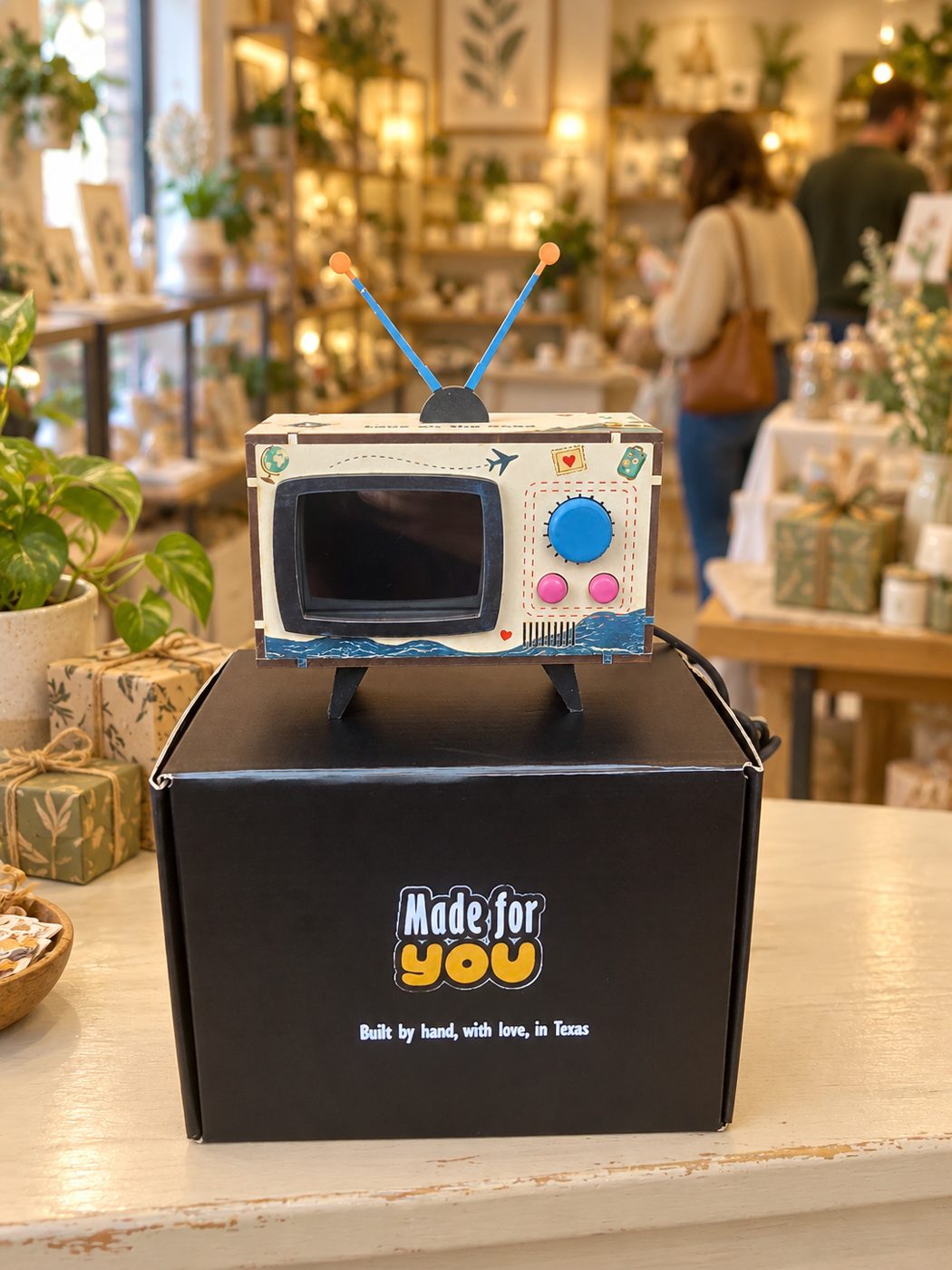
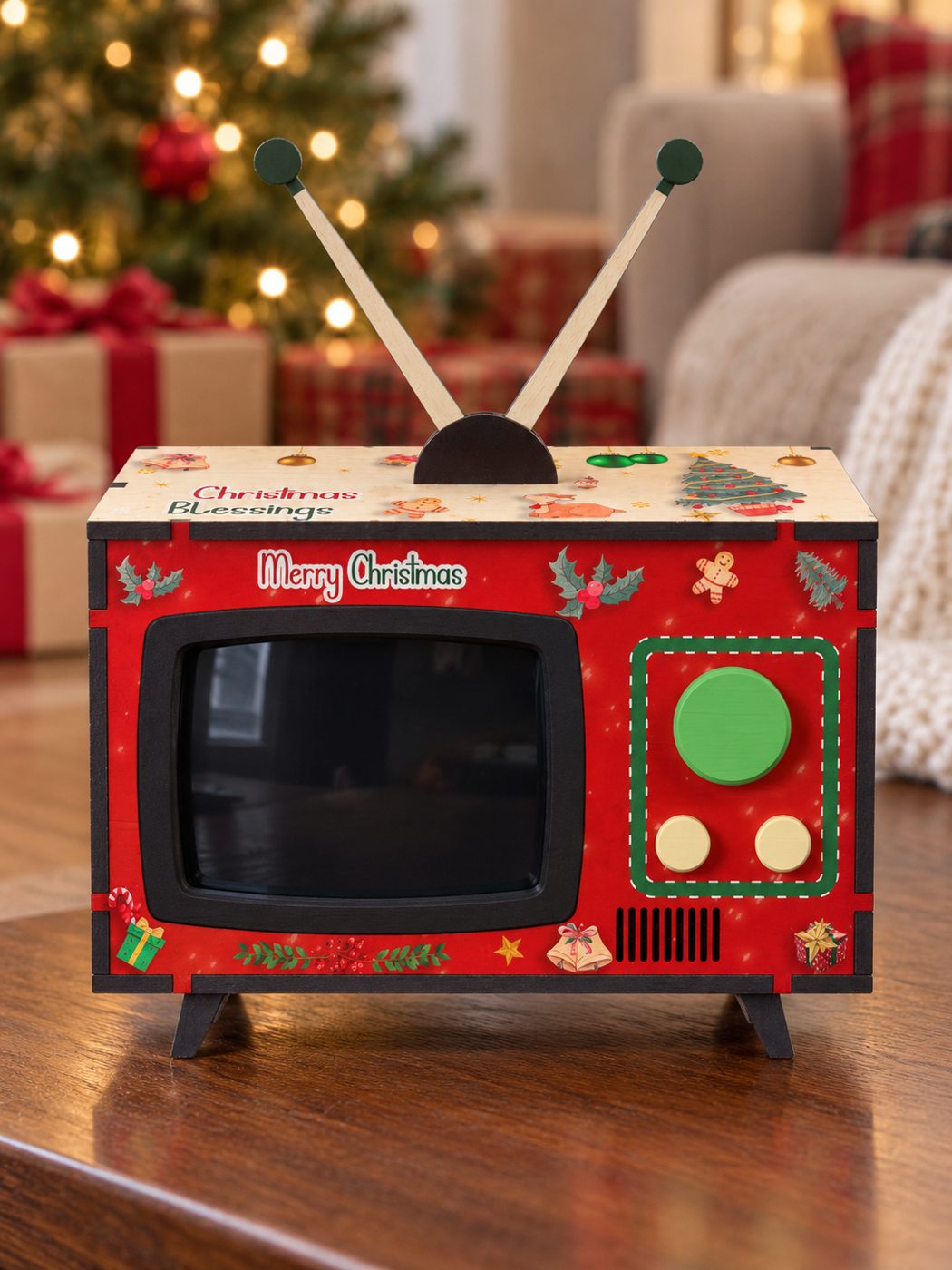
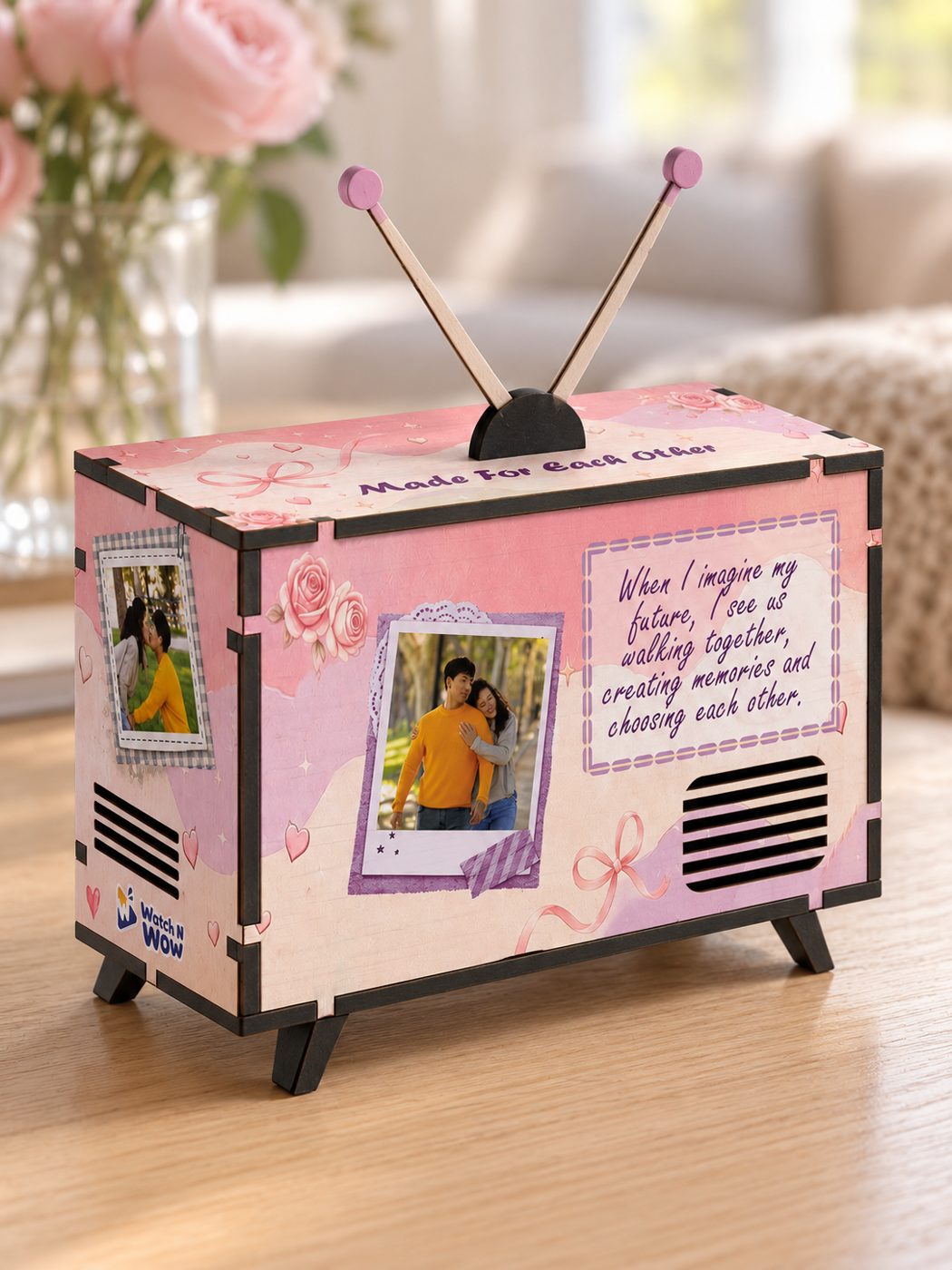
Ricky Flores is the founder of Watch N Wow and an electrical engineer with 15+ years of experience building consumer technology at Apple, Samsung, and Texas Instruments. In Dallas, Texas, he builds the Mini Memory TV by hand: a small retro TV that plays a video, a message and an original song made from your photos and your story. Read more at watchnwow.com.
Sources
- Zhang, Y., & Epley, N. (2012). “Exaggerated, mispredicted, and misplaced: When ‘it’s the thought that counts’ in gift exchanges.” Journal of Experimental Psychology: General, 141(4), 667–681. https://doi.org/10.1037/a0029223
- Gino, F., & Flynn, F. J. (2011). “Give them what they want: The benefits of explicitness in gift exchange.” Journal of Experimental Social Psychology, 47(5), 915–922. https://doi.org/10.1016/j.jesp.2011.03.015
- Flynn, F. J., & Adams, G. S. (2009). “Money can’t buy love: Asymmetric beliefs about gift price and feelings of appreciation.” Journal of Experimental Social Psychology, 45(2), 404–409. https://doi.org/10.1016/j.jesp.2008.11.003
- Baskin, E., Wakslak, C. J., Trope, Y., & Novemsky, N. (2014). “Why feasibility matters more to gift receivers than to givers: A construal-level approach to gift giving.” Journal of Consumer Research, 41(1), 169–182. https://doi.org/10.1086/675737
- Paolacci, G., Straeter, L. M., & de Hooge, I. E. (2015). “Give me your self: Gifts are liked more when they match the giver’s characteristics.” Journal of Consumer Psychology, 25(3), 487–494. https://doi.org/10.1016/j.jcps.2015.01.006
- Galak, J., Givi, J., & Williams, E. F. (2016). “Why certain gifts are great to give but not to get: A framework for understanding errors in gift giving.” Current Directions in Psychological Science, 25(6), 380–385. https://doi.org/10.1177/0963721416656937
- Stanford Graduate School of Business (2011). “Give Them the Gift They’re Expecting.” Stanford GSB Insights. https://www.gsb.stanford.edu/insights/give-them-gift-theyre-expecting
- Chicago Booth Review (2013). “Using Behavioral Science to Pick the Perfect Holiday Gift.” https://www.chicagobooth.edu/review/2013/august/2012-12-10-gift
- Carnegie Mellon University (2016). “Want to give a good gift? Think past the ‘big reveal’.” ScienceDaily. https://www.sciencedaily.com/releases/2016/12/161206142647.htm